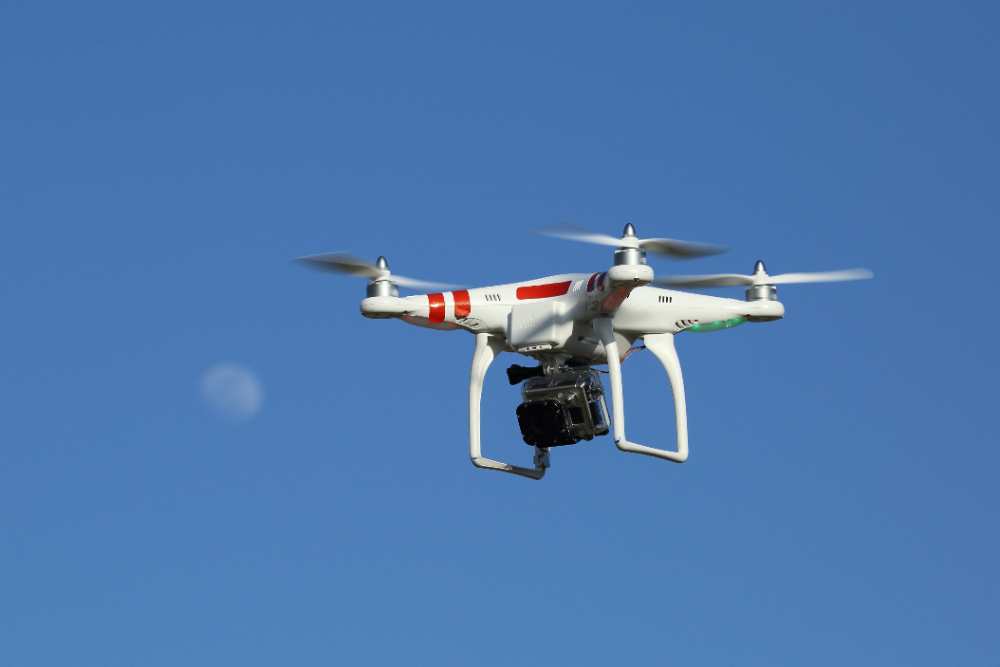
Law enforcement agencies across the United States are rapidly deploying Flock Alpha autonomous drones, capable of reading license plates from altitudes exceeding 2,000 feet at speeds up to 60 miles per hour. Over 1,000 police departments have now integrated these surveillance systems into their operations, yet civil liberties advocates warn that their deployment continues without formal federal privacy regulations or oversight mechanisms.
Flock Alpha drones represent a significant evolution in aerial surveillance technology. Each drone can capture high-resolution imagery of vehicle license plates across vast geographic areas, with the ability to cross-reference plate numbers against law enforcement databases in real-time. The drones can operate autonomously, patrolling designated zones without continuous human pilot control, and can be deployed rapidly to crime scenes or pursuit operations.
The rapid adoption by police departments has outpaced legislative efforts to regulate their use. While federal law generally requires warrants for surveillance activities, the Flock drone deployment has been justified under administrative exceptions and exigent circumstances. The American Civil Liberties Union has raised serious concerns about the lack of transparent policies governing when, where, and how these drones are deployed.
Privacy advocates point to the precedent set by other surveillance technologies. The Electronic Frontier Foundation has documented how initial promises of limited surveillance often expand dramatically once systems are operational. Flock drones, they argue, represent a critical juncture where privacy protections must be established now before the technology becomes ubiquitous.
Constitutional concerns center on Fourth Amendment privacy protections against unreasonable search and seizure. Legal scholars debate whether aerial license plate surveillance requires a warrant, or whether the public nature of streets makes such scanning permissible without judicial approval. For broader context on surveillance technology concerns, see also our coverage of emerging privacy issues in technology.
Some police departments have implemented limited policies governing Flock drone deployment, typically restricting use to serious crimes or emergency situations. However, enforcement of these self-imposed restrictions remains inconsistent, and the lack of federal standards creates a patchwork of local regulations that vary dramatically across jurisdictions.
The Flock situation highlights a broader pattern in surveillance technology adoption. Systems are often deployed with limited public awareness or input, their capabilities expand over time, and privacy implications become apparent only after widespread implementation. Legal experts argue that the time to establish protective frameworks is before, not after, technology deployment reaches critical mass across law enforcement agencies.