From a Garage in Los Altos to 2.5 Billion Devices: Apple at Fifty
On April 1, 2026, Apple marked half a century as a company. What started with two Steves hand-assembling circuit boards has become one of the most closely watched businesses on earth. Here is the story in milestones, numbers, and the five questions that will define the next chapter. Apple’s anniversary announcement is available on the Apple Newsroom.
Fifty years ago, Steve Jobs and Steve Wozniak signed the founding documents for Apple Computer on April 1, 1976 — in the garage of Jobs’s parents’ house at 2066 Crist Drive in Los Altos, California. The company was assembling computers by hand and selling them to hobbyists. It had no office, no receptionist, and no steady revenue. Fourteen-year-old Chris Espinosa, who rode a moped to work after school, was among the first people to show up. He became employee number eight. He still works at Apple today.
In the five decades since, Apple has built the iPhone — the world’s most consequential consumer electronics device — launched a services business generating over $100 billion a year, and accumulated 2.5 billion active devices across the globe. It was the first US company to cross a $1 trillion market cap, in 2018. As of April 2026, it ranks second globally behind Nvidia. Those looking for a deeper read on the AI memory crunch now affecting Apple’s roadmap will find more context in our earlier coverage.
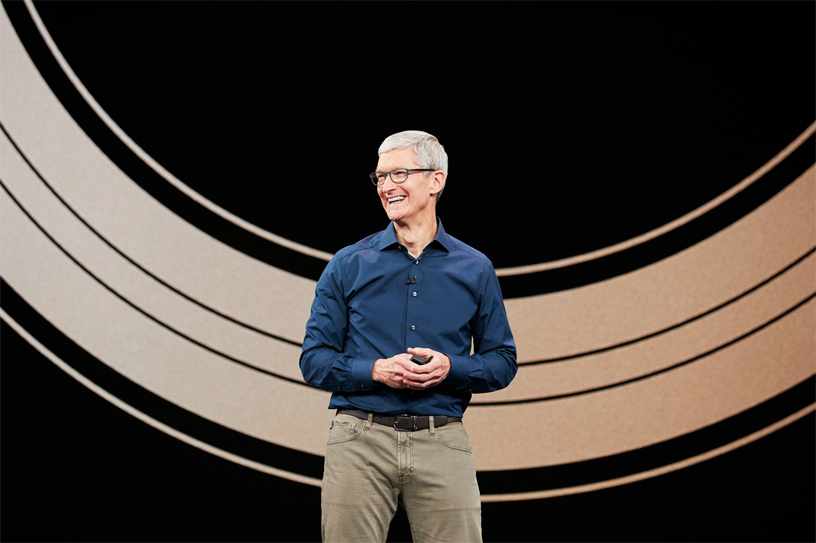
The anniversary was marked with a month of global events. On March 13, Alicia Keys performed at Apple Grand Central in New York City. On March 31, Sir Paul McCartney closed the festivities with a concert for employees at Apple Park in Cupertino. On April 1 itself, CEO Tim Cook published a letter to employees and Apple updated its homepage with a 50-year retrospective animation. Cook also rang the opening bell at Nasdaq to mark the occasion.
Apple in Figures — April 2026

The Milestones That Shaped Apple
Scroll through the key turning points — from a garage in Los Altos to a company employing over 150,000 people worldwide.
The Man Who Never Left
In 1976, Chris Espinosa was 14 years old, still attending Homestead High School in Cupertino, and working part-time at a company that had no office. He had met Steve Jobs at Paul Terrell’s Byte Shop in Palo Alto, where Jobs was installing an Apple I, and had become a regular at Homebrew Computer Club meetings. He started by testing Apple II BASIC code during his Christmas holidays, then moved on to writing demo programs and user documentation after school. He officially became employee number eight when Apple incorporated on January 3, 1977.
“It was a time of both great promise and great trepidation. The ability to have a great idea, start a company and then either not find your customers and go out of business or not manage growth and go out of business — that was just the rule.”
Espinosa worked through Apple’s near-bankruptcy in the mid-1990s, its turnaround after Jobs returned in 1997, and every major product launch since. He contributed to the classic Mac OS, HyperCard, AppleScript, Xcode, macOS, and the iOS Family Sharing system. In 2026, he is the company’s current and all-time longest-serving employee — a distinction that, in the revolving-door economy of Silicon Valley, is close to unprecedented.
As a New York Times profile noted on the anniversary, Apple has laid off staff “again and again and again” over the decades. Espinosa himself said his manager once told him he had been spared from one round of cuts only because his severance package would have been too expensive.
How Apple’s Active Device Base Grew
From a niche $499 device in 2007 to 2.5 billion active Apple devices by 2026 — the bars below track the relative growth trajectory across iPhone generations.
Bars represent relative growth in Apple’s active device base, not absolute unit sales. Source: Apple Newsroom. Also read: iPhone Air market share data →

Five Questions Apple Must Answer in Its Next 50 Years
Tap each question to read the key details. These are the issues analysts, insiders, and investors are watching most closely.
The Garage Is Gone. The Questions Are Not.
Apple’s 50th anniversary was covered across its founding milestones: the 1976 incorporation, the Apple II, the Macintosh, the iPod’s record-breaking growth figures, the iPhone’s 2007 launch and its engineers’ candid accounts of uncertainty, Tim Cook’s tenure, and the five strategic questions now facing the company. Chris Espinosa’s unbroken five-decade tenure was also discussed — from writing BASIC programs after school to being the last person standing from the original Apple garage era.
Apple’s anniversary celebrations — which spanned Alicia Keys at Apple Grand Central in New York, Sir Paul McCartney at Apple Park in Cupertino, global store events, and a Nasdaq opening bell — were noted as part of the company’s official anniversary programming. CNN’s special report on the anniversary, including commentary from former engineers, aired on April 4, 2026.
For further reading on the devices and technologies at the centre of Apple’s current challenges, see our earlier coverage on the AI DRAM shortage, the Mac Pro discontinuation, iPhone Air market share data, and the Nvidia architecture developments shaping the competitive AI hardware landscape.