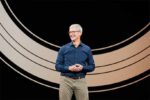
Apple turned 50 on April 1, 2026 — exactly half a century since Steve Jobs and Steve Wozniak signed the founding documents in Los Altos, California. On March 31, the eve of the anniversary, CEO Tim Cook rang the Nasdaq opening bell live from Apple Park, the ring-shaped campus Jobs spent his last years helping design. A private concert by Paul McCartney for Apple employees followed on the campus lawn. Cook, speaking at the Nasdaq ceremony, said: “50 years ago, Apple began with a big dream in Steve’s garage, fuelled by a simple but radical belief that technology should empower people and enrich their lives.”
The milestone arrives at a pivotal moment. Prior to the AI boom — which began with OpenAI’s ChatGPT in November 2022 — Apple’s business model was built on trust: pay a premium for a device, and your personal data stays yours. Google and Meta took the opposite approach, giving services away for free and monetising user attention. Apple’s co-founder Steve Jobs made privacy a founding principle, and Tim Cook has described it as a “fundamental human right” since taking over as CEO in 2011. That identity is now under pressure.
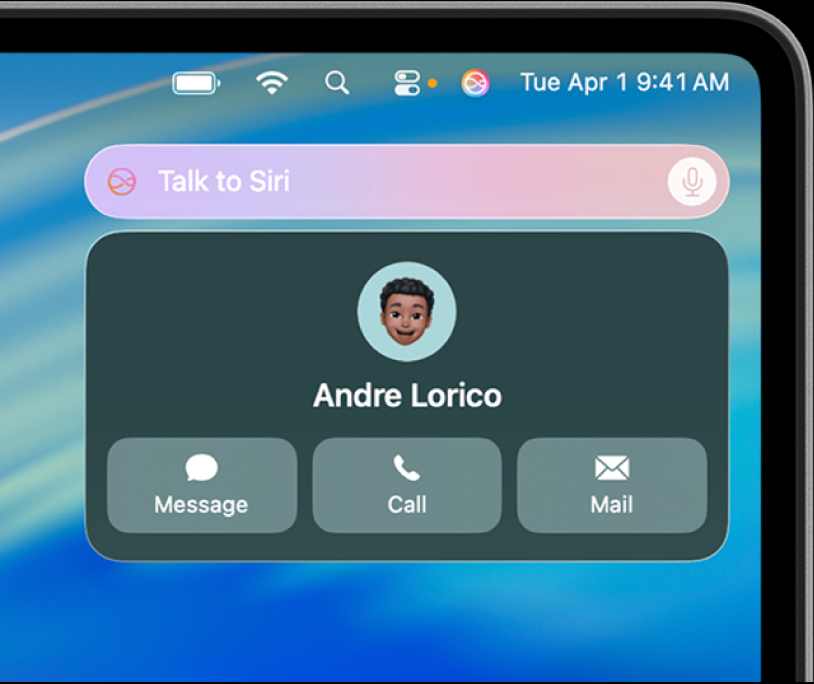
In January 2026, Apple and Google announced a multi-year partnership in which Google’s Gemini models will power the next generation of Apple Foundation Models, including a rebooted Siri. Reports place Apple’s annual cost at approximately $1 billion — a financial arrangement that reverses the usual dynamic. Google already pays Apple in the range of $20 billion a year to be the default search engine on the iPhone. In AI, the money flows the other way. Analyst Horace Dediu of Asymco has said the critical question is whether Google can use what flows through that arrangement to improve its own core products. Apple and Google’s joint statement says Gemini will run on Apple’s own Private Cloud Compute servers, keeping user data off Google’s infrastructure.
Apple by the Numbers
Key figures at the 50-year mark, drawn from company reports and confirmed statements.
Founded April 1, 1976
Latest reported quarter
default search on iPhone
for Google’s Gemini AI
latest quarter (buybacks)
AI-capable silicon in devices
Five Decades, Five Turning Points
Tap any event to expand the detail.
Siri launched with a co-founder, Dag Kittlaus, who left Apple after Jobs died, telling CNBC, “I didn’t want to work without him.” Adam Cheyer, who created Siri alongside Kittlaus, has said the original vision was for a system that could both answer questions and take action — a “knowing and doing” platform that could eventually support outside businesses the way the App Store does. That level of ambition never fully made it into what shipped. Kittlaus told CNBC: “There are no further technical barriers to any part of the Siri vision that we had from the old days. We would kill to have the technology back then that exists now.”
Apple has kept its capital expenditures in check while Amazon, Microsoft, Alphabet, and Meta have committed hundreds of billions of dollars annually to AI infrastructure. Gene Munster of Deepwater Asset Management has said Apple’s leadership “failed to recognise where the world was going and the speed things were happening,” leaving the company at what he described as a “fork in the road” on the long-term relevance of its products. The Google deal is widely read as Apple buying time while building its own AI foundation — a pattern it has followed before. Apple relied on Google Maps until Apple Maps was ready, on Intel chips until Apple silicon was ready, and on Qualcomm modems until it built its own.
Where the next hardware frontier lies is contested. In May 2025, OpenAI acquired Jony Ive’s startup io for approximately $6.5 billion — its largest acquisition. Ive, who designed the iPod, iPhone, iPad, and Apple Watch, has taken on creative and design responsibilities at OpenAI. Reports suggest their focus is AI-native devices that do not require a screen. Tony Fadell, who built the first three iPod generations before co-founding Nest, has said he believes these new form factors will be accessories to the phone, not replacements for it. Earlier attempts at screenless AI hardware — including Humane’s AI Pin — have not succeeded commercially.
The Lead That Got Away
Year each major voice assistant launched. Siri had a multi-year head start.
Three Questions Apple Carries into Year 51
Tap each card to flip it and read the detail.
Google’s Gemini will run on Apple’s Private Cloud Compute servers — not Google’s own infrastructure. Apple’s joint statement with Google says user data will not leave Apple’s systems. Analyst Horace Dediu says the line that must hold is that Google cannot use Apple user data to improve its own products or ad targeting. Whether that boundary holds in practice is what privacy advocates and regulators will watch.
Today’s frontier AI models are too large to run on a phone. But models are shrinking. On-device AI is advancing fast. Apple has been embedding AI-capable chips in its devices since 2017. When AI moves fully on-device, queries are processed locally and never touch a server — which is where Apple’s privacy argument becomes self-fulfilling. The Google deal is positioned as a bridge to that transition, not a permanent arrangement.
OpenAI’s acquisition of Jony Ive’s startup io for ~$6.5 billion brought together the maker of ChatGPT and the designer of the iPhone. Their reported focus: AI-native devices without a screen. Ive left Apple in 2019. Tony Fadell, who built the first iPhones, believes these devices will be accessories to the phone — not replacements. The hardware race is accelerating.
Tap any card to flip • Tap again to return
From the People Who Built Siri
Statements from Siri’s co-founders and analysts, as reported by CNBC.
What Apple Built That Most People Forgot
Technical contributions from Apple’s Advanced Technology Group that still shape computing today.
Apple’s Newton PDA, released in 1993, was slow and never found a mass market. But the search for a better chip for it changed the semiconductor industry. In 1990, Apple co-founded Arm Holdings through a joint venture with Acorn Computers and VLSI Technology. The Newton team needed chips that were powerful enough but drew very little power. Arm delivered. Newton failed. Arm did not. The same chip architecture that powered the Newton eventually powered every iPhone — a research arc that took over a decade to reach the consumer. For context on how Apple’s on-device silicon strategy relates to today’s on-device AI race, the foundation was laid in 1990.
Apple’s LaserWriter (1985) was one of the first consumer laser printers. It ran Adobe’s PostScript for font rendering and required a dedicated Motorola 68000-series processor to handle the workload. As PostScript licensing costs rose, Apple worked with Microsoft to build an alternative: TrueType, released in 1989. Both companies shipped it in their respective operating systems. TrueType is still used on macOS and Windows today. Adobe’s rival Type 1 font format has since been discontinued. The LaserWriter itself was discontinued when Jobs returned in 1997, but desktop publishing — and its font standards — outlasted it.
QuickTime launched in 1991 and made video playback on a personal computer genuinely practical for the first time. Over the following decade, the QuickTime team helped establish video format standards, most notably MPEG-4. Gavin Miller, a QuickTime team member and compression algorithm expert who later became Head of Research at Adobe, has described the QuickTime team as having “invented the modern media-rich world.” Apple discontinued the Windows version of QuickTime in 2016. The macOS version remains, though most codec work is now handled elsewhere. The team dispersed when Jobs shut down the Advanced Technology Group in 1997 — keeping only QuickTime, because it had just shipped a Windows version.
Apple’s first laptop, the Macintosh Portable (1989), weighed 16 pounds, had display and battery problems, and was discontinued in under two years. Apple moved quickly. CEO John Sculley calculated that laptops were heading toward 30 percent of the personal computer market and Apple had no product there. Taking inspiration from the Compaq LTE and reusing as many existing parts as possible, the team shipped the PowerBook in 1991. It ran for 15 years as a product line and set the physical form factor that laptops still broadly follow — trackpad in front, keyboard behind, screen hinged at the back. The team that built it left Apple shortly after and went to work for Compaq.
Apple’s 50th anniversary — April 1, 2026 — was marked by a series of events across late March and early April, including the Nasdaq opening bell ceremony at Apple Park on March 31, a Paul McCartney concert for employees, and an internal letter from Tim Cook quoting Steve Jobs. Chris Espinosa, who joined the company in 1976 at age 14 as employee No. 8, remained on staff on the anniversary.
This piece covered Apple’s founding in 1976, the development of Siri and its launch with the iPhone 4S in October 2011, the timeline of competing voice assistants from 2012 to 2022, the January 2026 Apple-Google Gemini deal, OpenAI’s acquisition of Jony Ive’s startup io, and technical contributions from Apple’s Advanced Technology Group — including the co-founding of Arm Holdings, TrueType fonts, QuickTime, and the PowerBook. For more on Apple’s 50-year history and key milestones, and details on the upcoming iPhone 18 Pro, see Giganectar’s coverage.