
Apple Kills $6,999 Mac Pro After 3 Years Frozen on M2 Ultra — Confirms No Future Model, Mac Studio Takes Over

GigaNectar Team

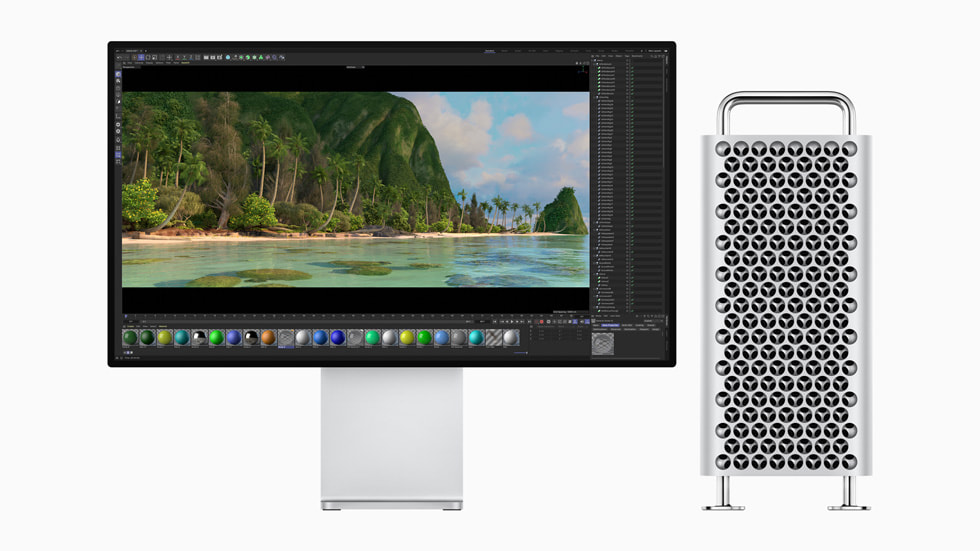
Apple Mac Pro M2 Ultra 3D render from WWDC 2023 showing the stainless steel tower design with drilled ventilation holes, the final version of the Mac Pro before Apple discontinued the product line in March 2026
Apple Mac Pro Discontinued — Full Verified Breakdown

Apple confirmed to 9to5Mac on March 26, 2026, that the Mac Pro has been discontinued. The product page was removed from Apple’s website that afternoon, with the buy URL now redirecting to the main Mac homepage. Apple also confirmed it has no plans to build any future Mac Pro hardware. The announcement was widely reported the same day.

The Mac Pro had been running on the M2 Ultra chip since June 2023 — three years without a single update — while Apple brought the M3 Ultra to the Mac Studio in March 2025. Sitting at $6,999 with outdated silicon, the gap between what the Mac Pro cost and what it offered had grown wide enough that Apple chose to end the line entirely rather than update it. The Mac Studio, available from $1,999, now sits at the top of Apple’s desktop lineup for professional users.

For broader context on Apple’s hardware direction, see our coverage of the iPhone Fold launch plans for 2026 and the AI DRAM shortage affecting Apple’s supply chain. Also worth reading: Wozniak’s comments ahead of Apple’s 50th anniversary.

By the Numbers
$6,999
Mac Pro’s last selling price at discontinuation
M2 Ultra · never reduced
3 yrs
Without a chip update — June 2023 to March 2026
Longest gap since 2013 “trash can” era
$1,999
Mac Studio M4 Max starting price — the new default pro desktop
M3 Ultra config starts at $3,999
512 GB
Max unified memory on Mac Studio M3 Ultra (top config)
M2 Ultra Mac Pro maxed at 192 GB
Apple Mac Pro 2023 M2 Ultra — the final version, now discontinued

The 2023 Mac Pro — powered by M2 Ultra, priced at $6,999. Apple’s last Mac Pro, and its last update as of June 2023.

History

How the Mac Pro Got Here — A Verified Timeline

From its debut at WWDC 2006 to its quiet removal from Apple’s website, here’s every key turning point for the Mac Pro.

Aug 7, 2006
Mac Pro Launched at WWDC
Apple introduced the Mac Pro at WWDC 2006, replacing the PowerPC-based Power Mac G5 lineup. It shipped with two dual-core Intel Xeon 5100 (Woodcrest) processors, starting at $2,499. Steve Jobs called it “the workstation Mac users have been dreaming about.” The iMac, Mac mini, MacBook, and MacBook Pro had already moved to Intel earlier that year — the Mac Pro completed Apple’s full switch from PowerPC to Intel in 210 days.
2008 – 2012
Regular Speed Bumps
Apple updated the Mac Pro in 2008, 2009, 2010, and 2012, cycling through Intel Xeon generations. The 2012 model offered up to a 12-core Xeon processor. These were incremental updates — no major design changes — but pros kept buying the tower for its internal expandability, PCIe slots, and user-upgradeable RAM.
Dec 2013
“Trash Can” — The Design That Backfired
Apple launched the cylindrical Mac Pro (internally the “Mac Pro 6,1”). Phil Schiller said “Can’t innovate anymore, my ass” on stage. The design had up to a 12-core Intel Xeon E5 processor, dual AMD FirePro GPUs, and was eight times smaller than the previous tower — but it had no PCIe expansion slots. The compact thermal design could not accommodate larger single-GPU cards as GPU technology evolved, leaving Apple unable to update the machine. It was never updated after launch.
Apr 2017
Apple Apologises to Pro Users
Phil Schiller and Craig Federighi held a rare off-the-record press roundtable acknowledging the 2013 Mac Pro had put the company into a thermal corner. Apple publicly admitted the design made future updates impossible and announced a new Mac Pro was in development. This was a direct acknowledgement that the 2013 design had failed its target audience.
Dec 2019
The Tower Returns — “Cheese Grater” Mac Pro
Apple launched the new Mac Pro tower (Intel Xeon W, up to 28-core) alongside the Pro Display XDR. The stainless steel chassis with drilled holes earned the “cheese grater” nickname. It had eight PCIe expansion slots and a modular design. Starting price: $5,999. Optional $699 wheels turned into a much-discussed meme. Professional users finally had an expandable tower again — but Apple Silicon was already being planned.
Nov 2020
Apple Silicon Begins — Mac Pro’s Clock Starts Ticking
Apple announced its transition from Intel to its own M-series chips, starting with the M1 in the MacBook Air, MacBook Pro, and Mac mini. Apple Silicon brought unified memory — RAM built onto the processor die — which meant it could no longer be upgraded after purchase. The Mac Pro’s key differentiator (user-upgradeable RAM and third-party GPU expansion) was becoming structurally incompatible with where Apple was heading.
Mar 2022
Mac Studio Arrives — and Changes Everything
Apple launched the Mac Studio: a compact desktop with M1 Max or M1 Ultra, starting at $1,999. The M1 Ultra configuration offered performance comparable to the Intel Mac Pro at roughly $3,000 less. The Mac Studio had no PCIe slots, but for most professional workflows — video editing, 3D, music production — it was sufficient or superior. The Mac Pro’s commercial rationale became thinner immediately.
Jun 2023
M2 Ultra Mac Pro — The Final Update
Apple refreshed the Mac Pro with the M2 Ultra chip, keeping the same 2019 chassis. Base config: 24-core CPU (16 performance + 8 efficiency cores), 60-core GPU (76-core option for +$1,000), 192 GB max unified memory, 8 TB max storage. It had seven PCIe expansion slots — six Gen4 and one Gen3 reserved for Apple’s I/O card. Price: $6,999. The chip could not use third-party GPU cards for graphics rendering. This was the last time Apple would ever update the Mac Pro.
Mar 26, 2026
Discontinued — No Successor Planned
Apple confirmed to 9to5Mac the Mac Pro is discontinued. Removed from Apple’s website. The buy page redirects to the Mac homepage. Apple stated it has no plans for future Mac Pro hardware. Mac Studio — starting at $1,999 with M4 Max, or $3,999 with M3 Ultra — is now Apple’s top desktop for professional users. Bloomberg had flagged in November 2025 that the Mac Pro was “on the back burner” and might never be updated. That turned out to be the case.
Head to Head

Mac Pro (Final, 2023) vs Mac Studio M3 Ultra — Spec by Spec

The Mac Pro M2 Ultra had 7 PCIe slots (6 Gen4 + 1 Gen3 for Apple I/O). The 2019 Intel Mac Pro had 8 PCIe slots. Neither the 2023 Mac Pro nor the Mac Studio support third-party GPU cards for graphics in Apple Silicon. CPU/GPU figures below reflect the base configuration for each machine — upgrade options are noted where applicable.

Spec Mac Pro M2 Ultra (2023) GONE Mac Studio M3 Ultra (2025) CURRENT
Chip M2 Ultra M3 Ultra
CPU (base) 24-core 28-core (up to 32-core)
GPU (base) 60-core (up to 76-core) 60-core (up to 80-core)
Max Unified Memory 192 GB 512 GB
Max SSD Storage 8 TB 16 TB
PCIe Slots 7 (6×Gen4 + 1×Gen3 I/O) None (Thunderbolt 5)
3rd-Party GPU Support No (compute only) No
Starting Price $6,999 $3,999
Form Factor Full Tower Compact Desktop
Last Updated June 2023 March 2025
Status DISCONTINUED AVAILABLE
Apple Mac Studio 2025 with M4 Max and M3 Ultra — now the professional Mac desktop

Mac Studio (2025) — available with M4 Max from $1,999 or M3 Ultra from $3,999. Apple’s primary desktop for professional users going forward. Source: Apple Newsroom

Performance Gap

Max CPU Cores: Mac Pro vs Mac Studio (2022–2025)

While Mac Studio added more CPU cores with each generation, the Mac Pro sat frozen at 24 cores from June 2023 until it was discontinued in March 2026. Each Mac Studio generation surpassed it — the M3 Ultra’s top config hits 32 cores, the same chip Apple chose not to put in the Mac Pro.

Mac Pro (final spec — frozen)
Mac Studio (max CPU config per gen)
What’s Left

Apple’s Desktop Lineup After the Mac Pro

Apple now sells three desktop Macs. Mac Studio takes the top position. Mac mini and iMac cover the mid-range and all-in-one segments. On the laptop side: MacBook Neo, MacBook Air, and MacBook Pro remain.

Mac Studio — Top Desktop
M4 Max from $1,999 / M3 Ultra from $3,999. Up to 32-core CPU, 80-core GPU (M3 Ultra top config), 512 GB unified memory, 16 TB SSD. Thunderbolt 5. M5 Ultra variant expected later in 2026. See our Apple chip coverage for more.
🖥️
Mac mini — Compact Pro
M4 and M4 Pro configs. Smallest desktop Apple makes. A percentage of Mac mini units are now assembled in the USA, a factor that reportedly kept the Mac Pro on sale longer than it would have otherwise.
🎨
iMac — All-In-One
M4 chip, 24-inch 4.5K Retina display. Consumer-focused desktop. Not a replacement for Mac Pro workflows — it’s aimed at a different user entirely.
🔗
Thunderbolt 5 Scaling
macOS Tahoe 26.2 added RDMA (Remote Direct Memory Access) over Thunderbolt 5. This lets multiple Macs connect with low latency — a way to scale compute without a Mac Pro tower. Also relevant: our latest Windows 11 coverage for cross-platform users.
Key Questions

What Pro Mac Users Are Asking

Tap each question to read the fact-checked answer.

Apple told 9to5Mac directly that it has no plans to offer future Mac Pro hardware. This is not a pause — it is a confirmed end to the product line. Bloomberg’s Mark Gurman had flagged in November 2025 that the Mac Pro was “on the back burner” with no update expected in 2025 or 2026. Apple’s confirmation on March 26, 2026 made that permanent.
Only partially. The M2 Ultra Mac Pro had 7 PCIe slots — 6 Gen4 and 1 Gen3 reserved for Apple’s I/O card. However, Apple Silicon does not and will not support third-party GPU cards for graphics rendering. PCIe was useful for audio/video I/O cards, networking, and storage expansion — but the GPU expandability that made earlier Mac Pros essential for studios was gone. Unified memory also cannot be upgraded after purchase on any Apple Silicon Mac, removing another reason users paid the Mac Pro premium.
The Pro Display XDR, which launched alongside the 2019 Mac Pro, was also discontinued earlier in March 2026. Apple has released a new Studio Display XDR as a replacement. The M3 Ultra Mac Studio can drive up to eight 6K displays — matching what the Mac Pro could do and then some.
The M5 Ultra Mac Studio is expected in the first half of 2026, according to industry reporting. The current Mac Studio skipped the M4 Ultra entirely — it offers M4 Max and M3 Ultra as the two chip options. The M4 Ultra was not produced, likely due to manufacturing considerations around Apple’s UltraFusion architecture. The M5 Ultra is expected to restore a full Ultra chip at the top of the Mac Studio lineup.
Yes. The M2 Ultra Mac Pro (2023) runs Apple Silicon and will continue to receive macOS updates for several years under Apple’s standard support policy. Refurbished units remain available through Apple’s Certified Refurbished store. Intel-based Mac Pro users (2019 model) may face an earlier end-of-support timeline, consistent with Apple’s typical approach of supporting Intel Macs for around five to seven years after their last macOS compatibility.
One reported factor: the Mac Pro was assembled in the United States — a detail with commercial and political value. With a percentage of Mac mini production now moving to US assembly, Apple no longer needed the Mac Pro to satisfy that requirement. The M2 Ultra Mac Pro was also the last Mac to complete Apple’s transition from Intel to Apple Silicon (launched June 2023). Once that milestone was achieved, the Mac Pro had less strategic purpose within Apple’s lineup.
Closing

Apple’s Mac Pro line was covered in this piece from its 2006 debut to its discontinuation on March 26, 2026. The product’s history was traced across the 2013 cylindrical design, the 2019 tower return, the 2023 M2 Ultra refresh, and the final removal from Apple’s website. Confirmed facts from Apple, verified specs from Apple’s official newsroom and technical documentation, and pricing sourced from Apple’s March 2025 Mac Studio announcement were used throughout.

The Mac Studio M3 Ultra and M4 Max configurations, their pricing, and the current desktop lineup — iMac, Mac mini, and Mac Studio — were discussed as the context in which the Mac Pro’s discontinuation was confirmed. The Thunderbolt 5 RDMA feature in macOS Tahoe 26.2, the Pro Display XDR’s earlier discontinuation, and Apple’s confirmation of no future Mac Pro hardware were all included as reported developments. For more Apple hardware and tech coverage, see our iPhone Air coverage and the AI DRAM shortage piece.


Leave a comment