
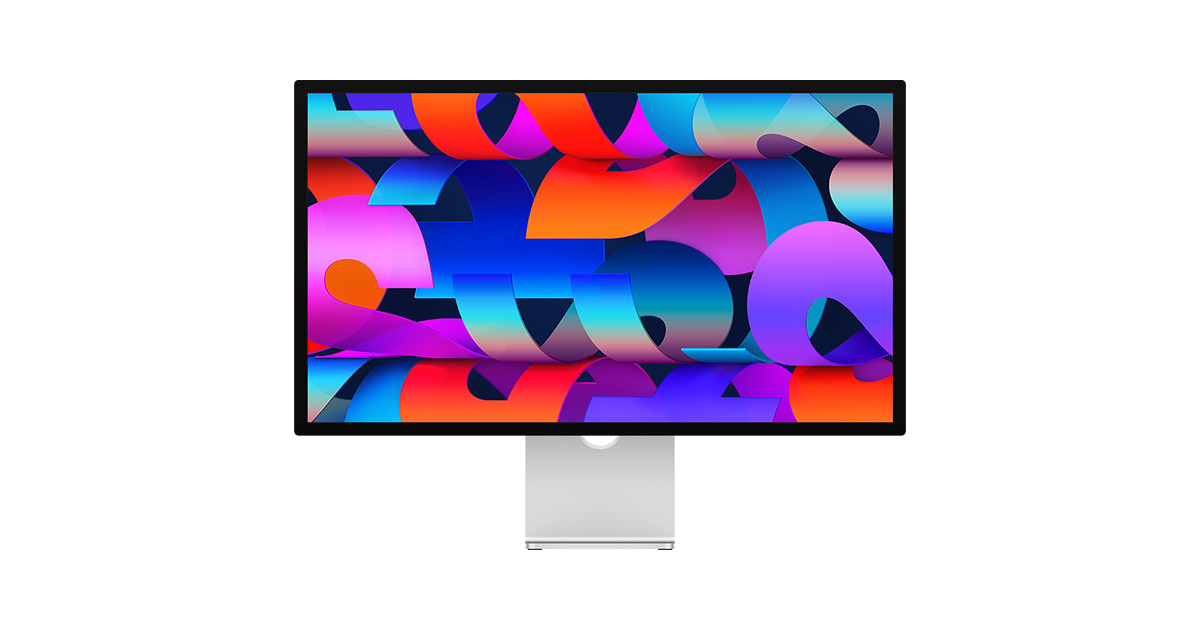
Apple reportedly plans to release a new Studio Display in the first half of 2026, with a rumored 90Hz refresh rate instead of the expected 120Hz ProMotion technology. The information comes from multiple sources, including an anonymous listener of the Relay FM tech podcast “Upgrade” in November 2024, and was recently backed up by a MacRumors tipster who discovered code strings in an internal iOS 26 build.
The current Studio Display features a 60Hz refresh rate, making any increase in refresh rate a step forward. However, 90Hz would be unusual for Apple, which typically offers displays with either 60Hz or 120Hz refresh rates across its iPhone, iPad, and Mac product lines.
Shipping times for the current Studio Display are slipping to late February and early March 2026, with inventory running low both online and in Apple retail stores. An unreleased Apple monitor with model number A3350 was spotted in a Chinese regulatory database in January 2026, likely representing the Studio Display 2.
Decoding the 90Hz Decision
The tipster believes bandwidth considerations are behind the 90Hz specification. While Thunderbolt 5 can support 5K resolution at 120Hz without compression, Apple may want to ensure ample remaining bandwidth for connecting peripherals and devices to the display.
Refresh Rate Breakdown
- Current Studio Display (A2525)
- Pro Display XDR
- Standard office monitors
- Rumored Studio Display 2 (A3350)
- Potential future iPad Air models
- Possible iMac updates
- iPhone Pro models
- iPad Pro lineup
- MacBook Pro 14″ & 16″
According to Bloomberg’s Mark Gurman, Apple plans to release the new Studio Display in the first half of 2026. The current Studio Display launched in March 2022 alongside the Mac Studio, making it nearly four years old at the time of the rumored refresh.
The rumored specifications include mini-LED backlighting for improved contrast and brightness, HDR support for enhanced color accuracy, and an A19 or A19 Pro chip replacing the current A13 Bionic processor. The newer chip would power improved Center Stage camera performance and enhanced audio processing.
Development Timeline
An anonymous listener of the Relay FM podcast “Upgrade” claimed Apple was developing 90Hz display technology for the next Studio Display, along with future iPad Air and iMac models.
An unreleased Apple monitor with model number A3350 surfaced in a Chinese regulatory database, indicating the Studio Display 2 was moving through certification processes.
A MacRumors tipster backed up the 90Hz claim based on alleged information from an internal iOS 26 build, with code strings and display controller references suggesting the 90Hz limitation.
Bloomberg’s Mark Gurman reports Apple plans to release the new Studio Display during this period, with current model shipping times slipping to late February and early March.
The internal iOS 26 build referenced in the reports is from early 2025, meaning Apple’s plans may have changed since then. This timing detail adds a layer of uncertainty to the 90Hz specification, as product development timelines can shift based on technical challenges or market feedback.
Some reports have suggested the Studio Display 2 might support 120Hz ProMotion instead of 90Hz, creating conflicting expectations. The actual refresh rate specification will only be confirmed when Apple officially announces the product.
Bandwidth Calculator
Calculate display bandwidth requirements to understand why Apple might choose 90Hz over 120Hz for 5K resolution
The bandwidth calculator demonstrates that Thunderbolt 5’s 80 Gbps capacity can theoretically handle 5K at 120Hz without compression. However, Apple may have chosen 90Hz to preserve headroom for peripherals, external drives, and additional displays connected through the Studio Display’s hub functionality.
The current Studio Display uses Thunderbolt 3 with a single upstream port supporting 96W host charging, along with three downstream USB-C ports operating at 10 Gbps. The new model will likely feature Thunderbolt 5 connectivity for increased bandwidth allocation.
Specifications Comparison
The Studio Display 2 is expected to maintain the 27-inch screen size and 5120×2880 resolution of the current model. The mini-LED backlighting technology would enable higher peak brightness levels and improved contrast ratios compared to the standard LED backlight in the existing display.
Apple’s decision to use the A19 or A19 Pro chip represents a significant processing upgrade from the A13 Bionic, which debuted with the iPhone 11 series in 2019. The newer chip would enable advanced computational photography features for the built-in 12-megapixel ultra-wide camera and improved Center Stage functionality.
Technical Considerations
The rumored 90Hz refresh rate for the Studio Display 2 was discussed through multiple sources, including the November 2024 Relay FM podcast tip and the February 2026 iOS 26 code discovery. The internal code strings from early 2025 contained references to display controllers and refresh rate specifications that pointed to 90Hz as the maximum supported rate.
The current Studio Display with model number A2525 was released in March 2022, featuring a 60Hz refresh rate, A13 Bionic chip, and standard LED backlighting. The new model with designation A3350 appeared in Chinese regulatory databases in January 2026.
Bloomberg’s Mark Gurman reported the first half of 2026 as the planned release window. The shipping delays for current inventory, extending into late February and early March, were noted as potential indicators of the upcoming refresh. The rumored features—mini-LED backlighting, 90Hz refresh rate, HDR support, and A19 chip—were mentioned across various industry sources.