
Your Dashboard, Apple’s Rules — Who Said Yes, Who Said No
Apple launched CarPlay Ultra on May 15, 2025 — nearly three years after its first preview at WWDC 2022. It debuted exclusively on Aston Martin vehicles in the US and Canada, and has stayed there ever since. Meanwhile, Apple’s software updates have kept expanding CarPlay’s capabilities — including new AI-driven voice tools like ChatGPT integration in iOS 26.4. The bigger question in 2026: which car brands will actually put it in a vehicle you can buy?
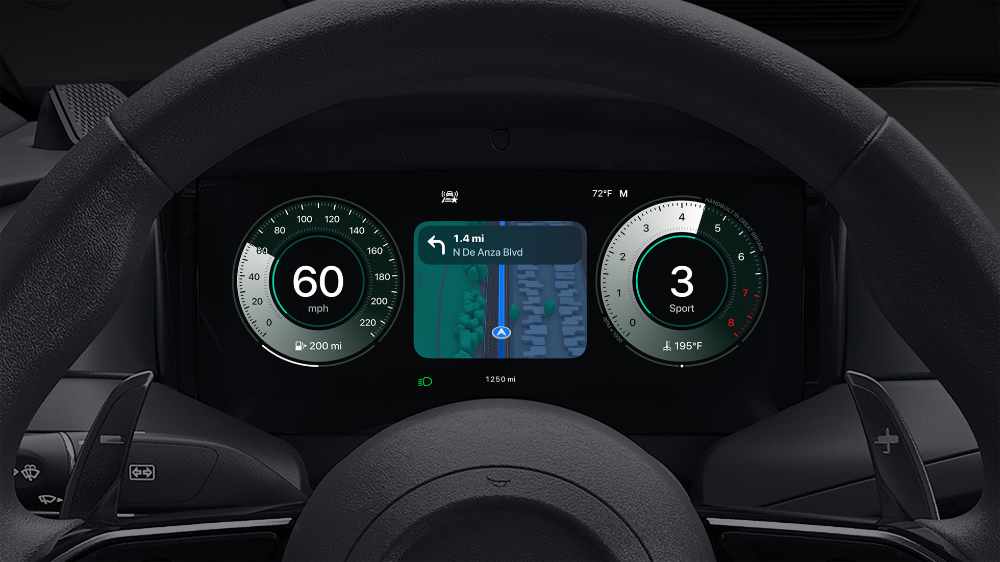
Standard CarPlay has been in vehicles for over a decade — and by Apple’s own count, 98% of new cars in the US now include it, with drivers using it over 600 million times daily. CarPlay Ultra is a different proposition. It asks automakers to let Apple’s interface handle their entire dashboard display, including the instrument cluster, which many brands treat as core to their identity and a growing source of subscription revenue.
On Aston Martin vehicles, CarPlay Ultra launches automatically on ignition after a one-time iPhone setup. The 10.25-inch infotainment screen and the driver instrument cluster both run Apple’s software. Aston Martin was chosen partly because of its in-house infotainment system, developed from scratch in 2023 starting with the DB12, which gave Apple a clean integration surface. Models currently supported: DBX, Vantage, DB12, and Vanquish.
🟢 Live Now | 🟡 Committed / Planning | 🔴 Not Offering CarPlay Ultra
Jaguar and Land Rover listed as evaluating as of mid-2025. Ford, Nissan, and Infiniti have not publicly updated their position. GM has phased out standard CarPlay from its new EVs and is unlikely to offer CarPlay Ultra.
The resistance from major brands comes down to one thing: control. CarPlay Ultra, unlike standard CarPlay, doesn’t just mirror a phone screen — it takes over the entire dashboard software layer, including the instrument cluster. For automakers building subscription-based services and proprietary connected-car platforms, that’s a significant concession. A Renault executive was quoted in the Financial Times as telling Apple directly: “Don’t try to invade our own systems.”
Audi confirmed it would keep offering standard CarPlay but said its goal was to provide “a customised and seamless digital experience” — a phrase pointing to its own in-house system. BMW, despite being an early CarPlay adopter, has not signed on for CarPlay Ultra and is developing its own iDrive X system. GM went the furthest: it has phased out even standard CarPlay from its newer electric vehicles — including the Blazer EV, Equinox EV, and Silverado EV — in favour of a Google-based infotainment system.
The expansion of CarPlay Ultra to more vehicle models is expected to reshape how mainstream car buyers interact with their vehicles. Standard CarPlay required only a phone connection; Ultra requires deep hardware collaboration, custom theme development, and access to the vehicle’s internal data bus. Apple said in May 2025 that more automakers would follow within 12 months — which puts the clock at May 2026. Bloomberg’s reporting in February 2026 suggests at least one Hyundai or Kia model will carry CarPlay Ultra in the second half of 2026.
The piece covered CarPlay Ultra’s launch in May 2025, its current availability on Aston Martin vehicles in the US and Canada, Apple’s confirmed plans for Hyundai, Kia, and Genesis, and the automakers that have declined to participate — including Audi, Mercedes-Benz, Volvo, Polestar, Renault, BMW, Ford, and Rivian. GM’s separate decision to phase out standard CarPlay from its electric vehicle lineup was also covered, along with the system’s hardware requirements and new iOS 26.4 features that expand third-party voice app support for CarPlay.