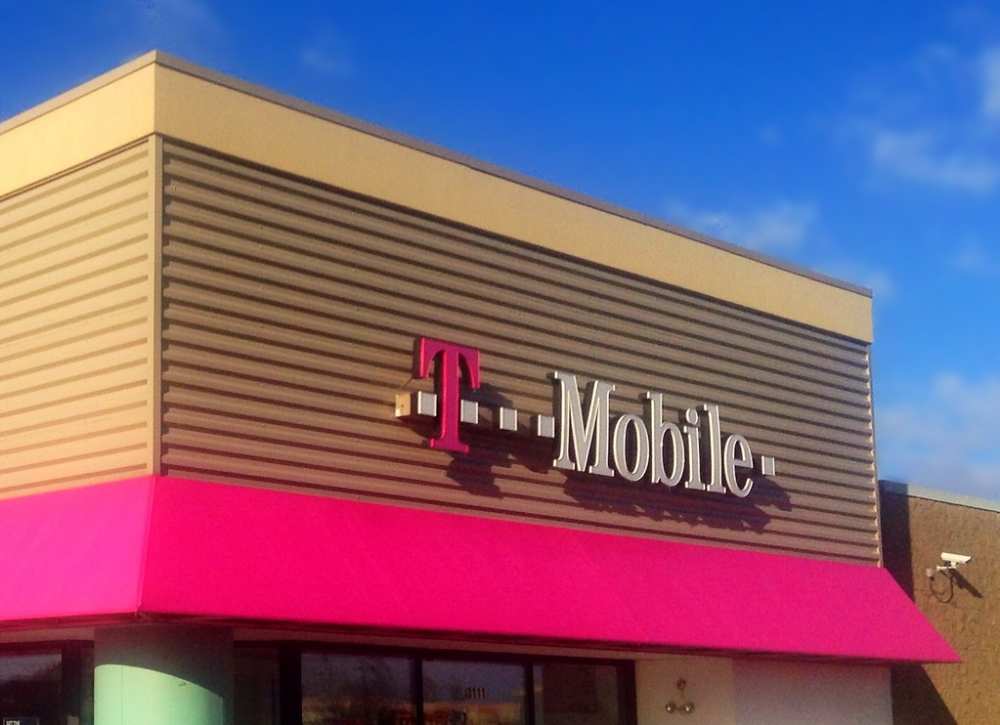
T-Mobile and Ericsson have completed large-scale commercial trials of an AI-native Scheduler with Link Adaptation on T-Mobile’s live 5G Advanced network — and the results are measurable. Spectral efficiency climbed by nearly 10%, and downlink throughput rose by up to 15% compared to traditional rule-based methods. A commercial rollout is planned for Q3 2025.
The technology runs a neural network directly on Ericsson hardware inside the Radio Access Network (RAN) — the layer that connects your phone to the core network. Rather than following fixed rules, it predicts changing radio conditions in real time and adjusts accordingly. The trial covered multiple U.S. markets including Los Angeles, New York, New Jersey, and Salt Lake City.
This follows T-Mobile’s April 2025 milestone as the first U.S. operator to deploy 5G Advanced nationwide — a standard built on 5G Standalone (5G SA) architecture that AT&T and Verizon have not yet matched nationwide. The AI scheduler work builds on that foundation, targeting the performance consistency gap T-Mobile acknowledged in H2 2025 network reliability rankings.
Old RAN vs AI-native RAN
Toggle between how networks scheduled data before AI and how the new neural-network approach changes that.
how to allocate
real-time adaptation
(variable quality)
radio conditions
maximises spectrum
even under load
What changes for customers
Where T-Mobile stands vs AT&T and Verizon
RootMetrics tested over 3 million connections across 125 major U.S. markets in H2 2025. T-Mobile led on raw speed and 5G reach — but trailed on task reliability. These are the headline numbers. Select a metric below.
The AI-RAN Alliance — whose founding members include T-Mobile, NVIDIA, Ericsson, Nokia, and others — was announced at Mobile World Congress Barcelona in February 2024. T-Mobile, NVIDIA, Ericsson, and Nokia then opened a joint AI-RAN Innovation Center in Bellevue, Washington in September 2024, where current and future RAN trials are developed. The AI scheduler work released in May 2026 is a direct product of that collaboration — tested on live customer traffic, not a controlled lab environment.
The task-reliability gap that RootMetrics identified in H2 2025 matters here. T-Mobile’s Nokia and Ericsson markets ranked fifth and sixth out of six in vendor-based task success testing, even as T-Mobile maintained its lead on median download speeds. The AI scheduler specifically targets the conditions that cause reliability failures — poor radio frequency environments and high-demand peak periods — which is why T-Mobile has pointed to this upgrade as part of closing that gap. While the AI hardware industry wrestles with memory shortages, T-Mobile is deploying AI inside infrastructure that most users never see.
It is also worth noting what this upgrade is not: it does not require users to change devices or plans. The scheduler runs on Ericsson’s hardware in the RAN, meaning any compatible 5G device on T-Mobile’s network could benefit once the commercial rollout completes in Q3. Separately, devices need a Snapdragon 8 Gen 3 or 8 Elite chipset to access 5G Advanced features specifically — but the scheduler improvement applies at the network layer regardless of chipset.
T-Mobile’s AI-RAN journey
For context on where T-Mobile sits in the broader 5G landscape: T-Mobile is the only carrier to post above 100 Mbps median download speeds across all 125 major U.S. markets tested by RootMetrics in H2 2025. Developments in adjacent hardware sectors — including Google’s push into AI-native hardware and next-generation sensor stacks in consumer devices — suggest the end-device ecosystem is evolving alongside network infrastructure. The convergence of AI at both ends of the connection — in devices and in the RAN — is accelerating across the industry.
Separately, T-Mobile’s task-reliability ranking reflects a real tension: leading in raw throughput doesn’t automatically translate into the smoothest real-world experience. The AI scheduler is specifically designed to reduce that gap. Whether the Q3 commercial rollout matches the trial gains at full commercial scale remains to be seen — but the trial was itself large-scale, covering multiple markets on live customer traffic, which reduces the gap between lab results and commercial expectations. For comparison on how other platform ecosystems are evolving, see Instagram’s new disappearing photo format and Spotify’s 20th anniversary platform redesign for parallel examples of AI-influenced product shifts.
Covered in this piece
This article covered T-Mobile and Ericsson’s large-scale commercial trial of the AI-native Scheduler with Link Adaptation on T-Mobile’s 5G Advanced network — including the reported gains of nearly 10% spectral efficiency improvement and up to 15% faster downlink throughput versus legacy rule-based scheduling. The piece also covered T-Mobile’s April 2025 nationwide 5G Advanced deployment, the origins of the AI-RAN Alliance and the Bellevue Innovation Center, the H2 2025 RootMetrics ranking findings, the key quotes from T-Mobile SVP Grant Castle and Ericsson’s Johan Hultell, and the planned Q3 commercial rollout timeline.