
Motherboard Sales Drop Up to 37% as AI Drains RAM Supply — Asus, ASRock, Gigabyte and MSI Slash 2026 Targets

GigaNectar Team

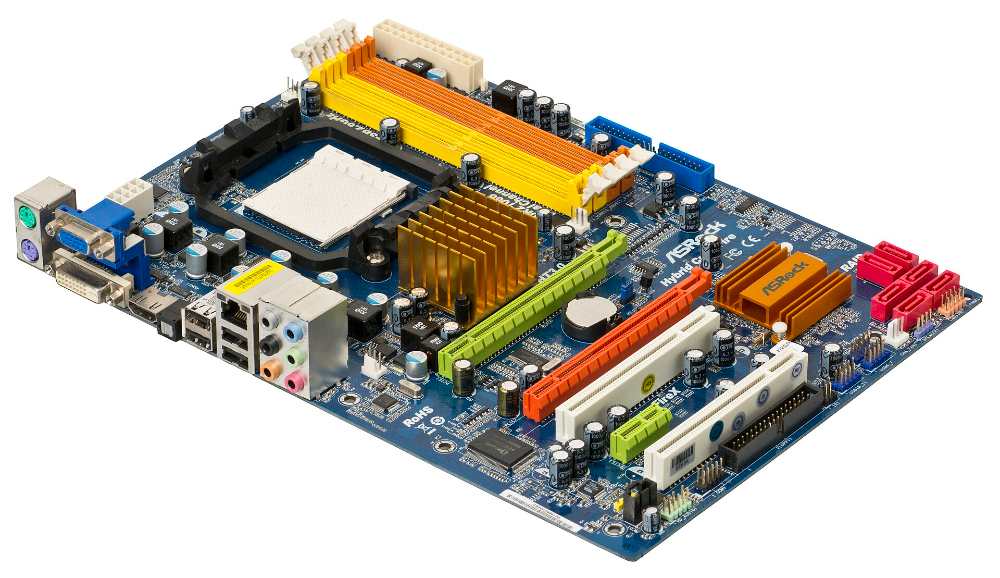
ASRock A790GXH/128M ATX motherboard with AMD 790GX chipset showing PCIe slots, DDR2 memory slots and I/O panel layout
PC Hardware Crisis · 2026

The PC Build Market Is Freezing — and AI Is the Reason

A global shortage of memory, CPUs, and GPUs driven by AI data center demand is forcing the four biggest motherboard makers to slash 2026 shipment targets by up to 37%.

If you’ve been holding off on a PC upgrade, you’re not alone. The component shortage triggered by the AI infrastructure buildout has now reached the motherboard market — the foundation of every desktop PC build. According to a report from Taiwanese industry publication Digitimes, all four major motherboard manufacturers — Asus, Gigabyte, MSI, and ASRock — have revised their 2026 shipment targets downward by 22% to 37%.

The root cause is the same across the board: AI data centers are consuming memory, processors, and power delivery components at a pace the consumer market simply cannot compete with. As a result, DDR5 memory, storage drives, and even certain CPUs have become harder to source at normal prices — and without affordable components, there’s little reason to build a new PC or buy a new motherboard.

The Digitimes report describes the situation as a “collapse” — worse than previous financial downturns and the first year of the COVID-19 pandemic, according to supply chain sources. Explore the full breakdown below.

The Scale of the Decline

2026 projected figures vs 2025 actuals — across all four major manufacturers.

↓ 33%
Asus15M units in 2025 → ~10M in 2026. Lowest annual output since the company’s 2008 split.
↓ 22%
Gigabyte11.5M → 8–9M projected. Scaled-back targets across consumer and enthusiast boards.
↓ 24%
MSI11M → 8.4M. A 24% year-on-year contraction in consumer motherboard volume.
↓ 37%
ASRock4.3M → 2.7M. The steepest drop of the four, compounded by ongoing AMD X3D BIOS instability reports.

Who’s Taking the Biggest Hit?

Scroll or tap a row to see the full picture. Drop % reflects projected full-year 2026 vs actual 2025.

Manufacturer 2025 Shipped 2026 Target Drop Severity
Asus
15.0M ~10M −33%
Gigabyte
11.5M 8–9M −22%
MSI
11.0M 8.4M −24%
ASRock
4.3M 2.7M −37%

Source: Tom’s Hardware via Digitimes

Three Factors Choking the DIY PC Market

Tap each cause to expand the full context. All three are happening at the same time.

AI training and inference workloads demand enormous quantities of high-bandwidth memory (HBM) and DRAM. As chipmakers like Nvidia, Intel, and AMD have redirected fabrication capacity toward AI accelerators, memory manufacturers have followed their priorities — leaving the consumer DRAM and DDR5 market undersupplied. DDR5 kit prices and storage drive costs have climbed as a result. Jese Martinez of custom PC company PowerGPU described the effect directly: “It’s memory, it’s storage, it’s multiple things that are happening. And it’s not just a few hundred bucks. Stuff is going up twice the price or three times the price.” Without affordable RAM, a motherboard upgrade makes little financial sense for most builders.
Nvidia’s RTX 60 series is not expected until 2028 per current rumours, and there has been no confirmed RTX 50 Super refresh for 2026. Digitimes noted in its report that the mid-to-high-end gaming PC market “lacks technical specifications that stimulate upgrades.” Without a compelling new GPU generation to target, there’s no push from builders to assemble a fresh platform, which removes one of the primary triggers for motherboard purchases.
AMD continues using its AM5 socket for current-generation processors, giving some builders a reason to wait rather than commit. Intel’s upcoming Nova Lake platform, which will reportedly use the new LGA 1954 socket, is not expected until the second half of 2026 — meaning buyers who want Intel’s next architecture will need a new motherboard anyway. That level of platform uncertainty is historically one of the strongest suppressors of upgrade activity in the DIY PC segment.

A Timeline of the Crisis

The motherboard slump didn’t happen overnight. Here’s the sequence of events.

Late 2024 – Early 2025
Memory prices begin climbing. AI data centres ramp up DRAM purchases for inference clusters. Consumer DDR5 supply tightens and prices rise. PC builders begin delaying purchases.
Early 2025
ASRock AMD X3D instability reports surface. Over 100 cases of Ryzen 9000X3D CPU failures on ASRock AM5 motherboards are reported. AMD and ASRock issue BIOS updates identifying a memory compatibility issue in earlier firmware versions as the cause.
Mid 2025
GPU upgrade incentives fade. Nvidia announces no RTX 50 Super refresh for 2026. RTX 60 series rumoured to be pushed to 2028. Without a new GPU generation to target, platform builds stall across the enthusiast market.
Late 2025 – Q1 2026
Chipmakers reduce consumer chip output. Nvidia, Intel, and AMD shift fabrication capacity further toward AI processors. Consumer CPU allocations tighten. Even high-end desktops and MacBooks begin facing supply pressure.
May 2026
Digitimes publishes its report. The publication cites supply chain sources calling the motherboard market decline “worse than previous financial crises and the first year of the COVID-19 pandemic.” All four major manufacturers have lowered annual shipment targets, with the combined market down roughly 25–28%.

Consumer Down, AI Server Up

The same force that cut consumer sales is padding revenue from a different direction. Asus, Gigabyte, and ASRock have all shifted capacity toward AI server motherboards — an area in high demand for 2026 data centre builds.

Consumer Motherboards
↓ ~28%
Combined contraction across Asus, Gigabyte, MSI, and ASRock in 2026 projected shipments vs 2025 actuals.
AI Server Shipments (Asus)
↑ 100%+
Asus server motherboard shipments reportedly up over 100% year-on-year, per Digitimes supply chain sources, as hyperscalers expand data centre capacity.
“It’s memory, it’s storage, it’s multiple things that are happening. And it’s not just a few hundred bucks. Stuff is going up twice the price or three times the price.”
— Jese Martinez, PowerGPU

The Digitimes report covered above examined the combined effects of AI-driven memory shortages, chipmaker production shifts toward AI processors, and a pause in major consumer GPU updates on the motherboard market across 2025 and 2026. The data discussed points to a broader contraction in DIY PC activity, with the four major Taiwanese manufacturers — Asus, Gigabyte, MSI, and ASRock — having revised their full-year 2026 shipment targets downward by 22% to 37%.

For PC builders considering a new build, motherboard pricing at retail may reflect discounting as vendors move existing inventory. The situation across memory, GPU, and CPU supply chains — covered in detail in our reporting on the Snapdragon X2 Elite and ARM platform shifts and Nvidia’s Vera Rubin AI architecture — was discussed across various supply chain and manufacturer briefings throughout the period examined.


Leave a comment