
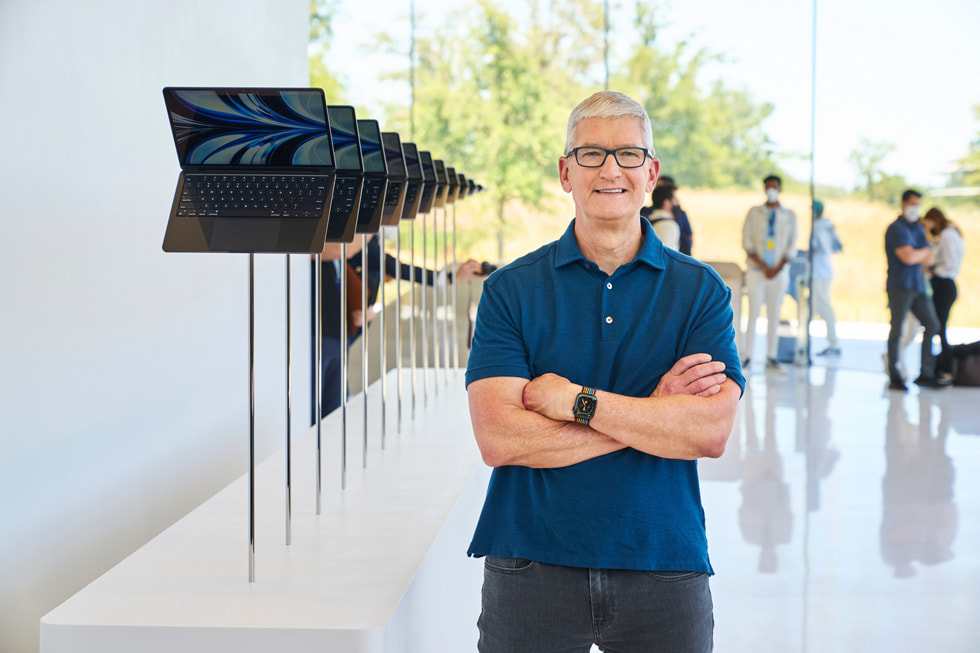
Apple has spent fourteen years telling customers its prices barely move. Tim Cook’s final WWDC keynote as chief executive came and went this June without a word on cost. Two days later, he told The Wall Street Journal something Apple has never said out loud before: prices are going up, and there is nothing the company can do to stop it. The reason traces back to a resource most phone buyers never think about, memory chips, and a global scramble for them that Apple’s own Siri AI rollout has only made worse.
Cook called the memory shortage “unsustainable” and said price increases are “unavoidable.” He did not say which products, by how much, or when. What he did say is that Apple is willing to spend from its own balance sheet to help secure more supply, an extraordinary admission from a company whose buying power has, for nearly two decades, let it dictate terms to its suppliers rather than the other way around.
When the World’s Biggest Buyer Can’t Buy Its Way Out
Why Apple, of all companies, is stuck
“The world is being disrupted by AI and, at the same time, even before we start reaping the benefits of AI in our devices, we are already paying the bill,” said Francisco Jeronimo, an analyst at IDC, describing the shortage’s reach. Ranjit Atwal, an analyst at Gartner, put it more bluntly: “Even Apple can’t be safe, as much as they have all the expertise and long-term planning, and everything else. This is beyond their capacity to limit the impact.”
“We’re willing to use our balance sheet to help be a part of the solution.”
— Tim Cook, Apple CEO, in his Wall Street Journal interview
The shortage has a simple root cause: artificial intelligence data centers and ordinary consumer electronics now compete for output from the same three factories. Samsung, SK Hynix, and Micron together produce nearly all the world’s DRAM, the short-term memory phones and computers depend on, and NAND, the flash storage used for everything from photos to apps. When one of those suppliers dedicates a production line to high-bandwidth memory for AI chips, it gives up making the ordinary memory that goes into a smartphone. A single Nvidia Blackwell B200 chip carries 192GB of high-bandwidth memory; eight of those chips fill one server, and data center operators are stacking over 2,000 servers into a single cluster. An iPhone, by comparison, runs on 8GB or 12GB of standard DRAM.
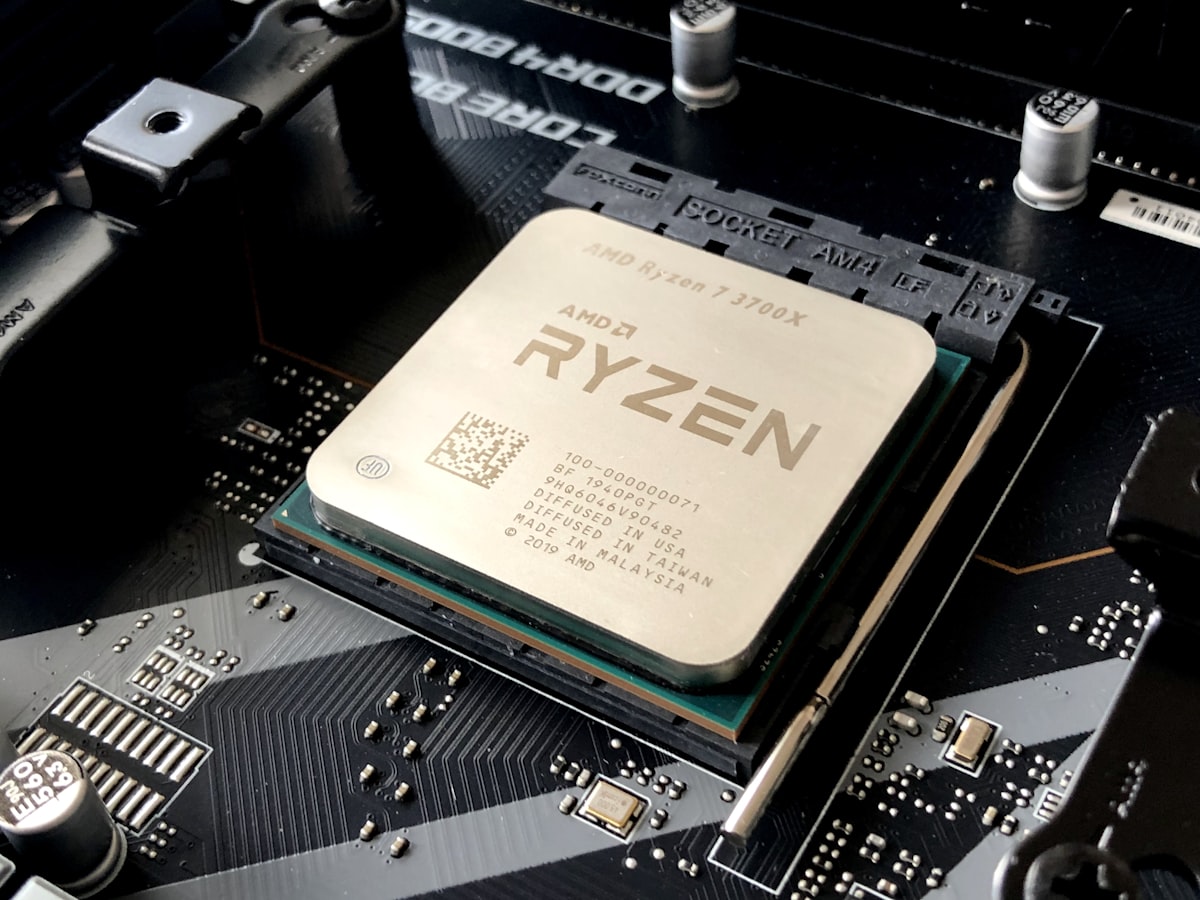
Memory wafer capacity is finite, and AI accelerators now claim a growing share of it before any reaches a phone or laptop assembly line.
Try it yourself
One Wafer, Two Buyers
Move the slider to act as a memory factory deciding where its production goes this month. Every unit shifted toward AI chips is a unit a phone or laptop maker doesn’t get. This is the trade-off Apple is now losing.
Built from production-allocation dynamics described by CNBC’s reporting on the memory shortage and Micron’s own account of the trade-off between HBM and conventional memory output. Figures are illustrative of the dynamic, not official company allocation data.
That zero-sum dynamic is why Apple, despite ranking among the most powerful purchasers in consumer electronics, cannot simply outbid the problem away. Memory makers are choosing to expand fabrication capacity, new buildings called fabs, but those projects take years to come online, and even then, much of the new output is likely to go to the higher-margin AI side of the business rather than back to phones and laptops.
Reading the Receipts: What Apple Has Said, In Order
A timeline of disclosures, not predictions
Scroll sideways to see the full sequence →
Cook’s disclosure carries extra weight given the calendar. He is handing the company to Ternus in roughly two months, and rather than leave the pricing decision for his successor to announce, Cook chose to flag it himself, on the record, before he departs.
Who Pays, and How Much
The numbers behind the warning
Apple has not named a figure, a product, or a date. Cook was explicit about that in the interview. What is known comes from Apple’s own recent pricing pattern and from the supply side of the chip market. Apple is not alone in citing this cost pressure either: Snap’s CEO pointed to rising memory-chip costs as one factor behind the price of Snap’s newly unveiled Specs AR glasses, which carry a $2,195 price tag.
IDC, the research firm tracking the broader device market, projects average smartphone selling prices will climb roughly 14% across the industry this year, a trend reaching Android makers alongside Apple, driven by the same memory squeeze. The firm’s analysts expect the shortage to persist through 2026 and into 2027, since new fabrication capacity takes years to build and much of it is being earmarked for AI memory rather than consumer devices. That backdrop is part of why Apple’s recent budget-tier launches, the $599 MacBook Neo and the $599 iPhone 16e, have drawn attention: some analysts see them as a hedge against rivals being forced to cut specifications or raise prices faster than Apple does.

Across the industry, average smartphone prices are on track for their steepest single-year rise in over a decade.
On the supply side, Micron’s own fiscal Q2 2026 earnings materials show the scale of the squeeze from the manufacturer’s side: revenue of $23.86 billion for the quarter, up 196% from a year earlier, with the company guiding to a record $33.5 billion in revenue and roughly 81% gross margin for the following quarter. Micron’s chief executive, Sanjay Mehrotra, told investors that “memory has become a strategic asset” in the AI era, and the company has said it can fill only a portion of demand from its largest customers in the near term. When a major supplier is constrained and a major buyer the size of Apple is telegraphing price increases in public, the dynamic that follows is fairly predictable: it flows toward whoever controls the wafer.
A Second Front: Bringing Chips Home
The supply chain shift running alongside the price story
The same week Cook spoke to the Journal, a second development surfaced. U.S. President Donald Trump announced on Truth Social that Apple had agreed to work with Intel to design and build chips domestically, part of a broader push to expand semiconductor manufacturing inside the United States. Neither Apple nor Intel issued a confirming statement detailing the scope, timeline, or specific chip models involved, and reporting from multiple outlets cites a preliminary agreement reached in May following over a year of discussions between the two companies. Intel shares moved up in premarket trading on the news, with reported gains ranging from roughly 6.5% to 10% depending on the session and source.
Apple has relied almost entirely on Taiwan Semiconductor Manufacturing Company to build the chips it designs in-house. A shift toward Intel as a domestic foundry partner would not solve the memory shortage directly, memory and logic chips are different products built in different kinds of factories, but it points toward the same underlying theme: Apple is restructuring parts of its supply chain in response to a cost and availability problem it cannot simply absorb the way it once could. Apple’s own fiscal Q2 filing already flagged supply constraints limiting iPhone sales potential during the same quarter Cook spoke about rising memory costs.
Closing the Loop
This piece covered Tim Cook’s confirmation to the Wall Street Journal that Apple will raise device prices due to the global memory shortage, the supply-side dynamics behind that shortage as described by Gartner and IDC analysts, Micron’s most recent earnings disclosures, and the separate announcement of an Apple-Intel domestic chip manufacturing arrangement. Apple has not specified which products will see price changes, by how much, or when those changes take effect. For related coverage on the hardware and software context behind this shortage, see our reporting on Apple’s Siri AI rollout and its 12GB RAM requirement, how the MacBook Neo compares to AMD’s AI laptop chips, and the broader AI talent and infrastructure race driving demand for compute and memory alike.