Who Gets To Use OpenAI’s Strongest Model First, And Why The White House Decides
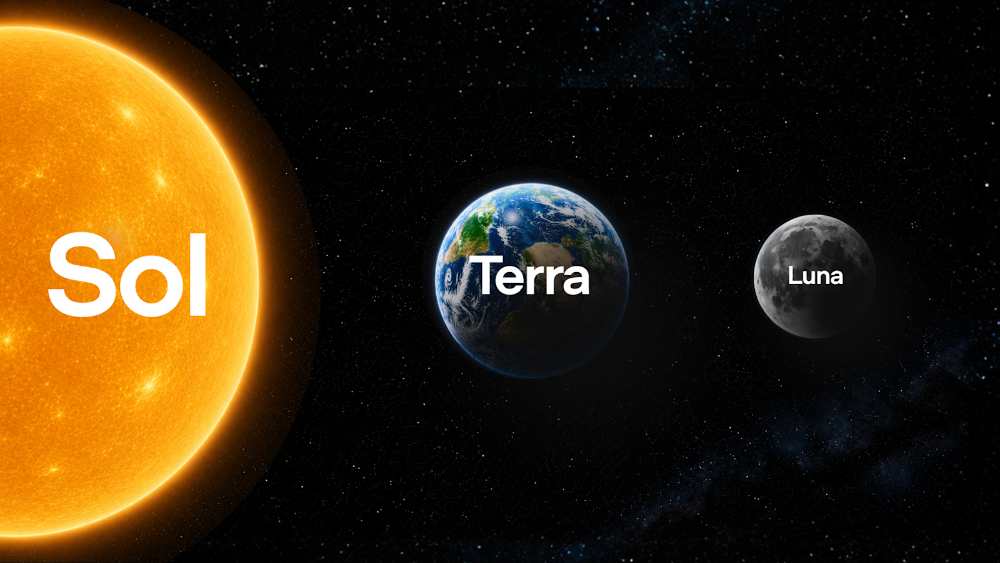
GPT‑5.6 Sol, Terra, and Luna are live, but only a small, government‑shared list of organizations can reach them right now. Trace the access pathway below, then open each panel to see what changes between tiers, risk levels, and price.
Three Models, Three Jobs: Compare Sol, Terra, And Luna
Tap a tier to see its pricing, its standout benchmark, and what kind of task OpenAI built it to handle.

Photo Source: Unsplash (Free to use under the Unsplash License)
Alt Text: Rows of server racks in a data center corridor lit by blue light
Why Every Tier In The Family Got Flagged As High Risk
OpenAI’s own system card rates the cyber and biology risk of the family. Here is how that compares with the one threshold none of them crossed.
How One June Order Set The Rules For This Launch
Tap each entry to expand the detail behind it.
President Trump signs the AI cybersecurity orderJUN 2, 2026▸
The White House issued “Promoting Advanced Artificial Intelligence Innovation and Security,” directing federal agencies to build a voluntary framework letting AI developers share advanced models with the government for up to 30 days before release to trusted partners. The order also creates a classified process for deciding when a model counts as a “covered frontier model,” a call made by the Director of the National Security Agency.
Agencies given a 60-day deadline to build the review processBY AUG 1, 2026▸
The order tasks the Treasury, War, and Homeland Security departments, working with the NSA, CISA, and NIST, with finishing the classified benchmarking process and the voluntary early-access framework within 60 days. That process did not exist yet when GPT‑5.6 launched, which OpenAI says is why it agreed to a phased rollout in the meantime.
OpenAI previews GPT‑5.6 Sol, Terra, and LunaJUN 26, 2026▸
OpenAI opened a limited preview through the API and Codex only, describing it as the company’s strongest model family yet and pairing the release with what it calls its most robust safety stack to date. ChatGPT access was not included in this preview.
Access starts with a government-shared partner listJUN 26, 2026▸
OpenAI says it shared its release plans and the models’ capabilities with the U.S. government ahead of launch and, at the government’s request, is starting with a small group of trusted partners and organizations whose participation has been shared with officials.
Broader rollout planned for the coming weeksAHEAD▸
OpenAI says it intends to make Sol, Terra, and Luna generally available across ChatGPT, Codex, and the API soon, while continuing to test and coordinate with partners during the preview period. No fixed general-availability date has been announced.

Photo Source: Unsplash (Free to use under the Unsplash License)
Alt Text: Close-up of a circuit board with glowing data pathways
What Cleared Partners Are Actually Paying
GPT‑5.6 also introduces explicit prompt-cache breakpoints with a 30-minute minimum cache life. Cache writes cost 1.25x the model’s standard input rate, while cache reads keep the existing 90 percent discount.