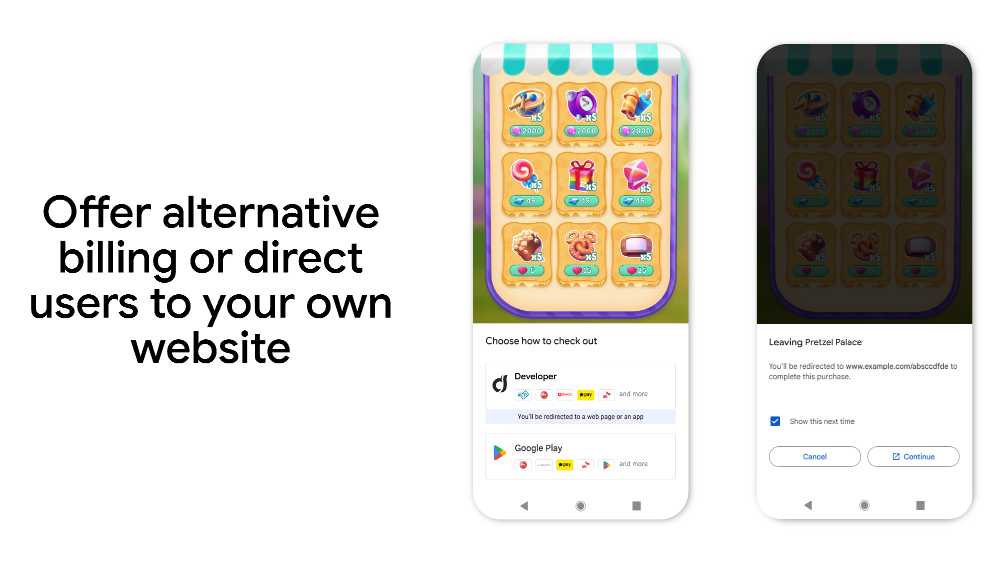
Google has confirmed June 30, 2026 as the start date for its biggest Play Store overhaul in over a decade. Starting that day, Android app and game developers in the United States, the United Kingdom, and the European Economic Area can use payment systems other than Google’s own billing tool, or send users straight to an external website to pay, without losing their Play Store listing. The change also ends Google’s flat 30 percent cut on Play Store transactions in those markets, replacing it with a tiered fee that opens at 10 percent.
The update follows the terms Google agreed to while settling its antitrust dispute with Epic Games, the maker of Fortnite, after a US court found that Google held an illegal monopoly over Android app distribution. Google laid out the mechanics of the new system in a post on its Android Developers Blog, written by Paul Feng, Vice President of Google Play Engineering, Product and UX. Developers building for other ecosystems are tracking similar shake-ups elsewhere in the industry, including the pricing pressure Apple is facing over its own App Store, detailed in our coverage of the PlayStation Store antitrust cases working through courts in the Netherlands, the UK, and California.

Why Google split one fee into two
Up to now, Google charged a single commission that covered everything: processing the payment and granting access to the Play Store’s reach. The new model breaks that into two separate charges. A service fee, starting at 10 percent on a developer’s first $1 million in yearly earnings, applies no matter which billing method is used, including external links. A second charge, the billing fee, only applies if a developer keeps using Google Play’s own payment processing, and it is set at 5 percent in the US, UK, and EEA. Choose an outside processor or send users to a website instead, and that 5 percent billing fee disappears, though developers then cover their own payment processor’s charges.
Once a developer’s app passes $1 million in annual earnings, the service fee rises. New installs, meaning users who downloaded the app on or after their region’s launch date, are charged 20 percent. Existing installs, meaning users who had the app before the new system arrived, are charged a higher 25 percent rate. Auto-renewing subscriptions are the one exception that stays flat at 10 percent regardless of earnings tier or install age. The full rate breakdown is published on the Play Console Help Center for developers calculating their own numbers.
From a flat 30 percent to a tiered system
For most of the Play Store’s history, Google took 30 percent of nearly every digital transaction inside an app, a rate that matched what Apple charged on the App Store. That commission became the center of multiple platform antitrust disputes across the games and app industry. Epic Games sued Google directly over the practice in 2020, and a jury later found Google had maintained an illegal monopoly over Android app distribution and in-app billing. Platform certification requirements are also tightening elsewhere in the Android ecosystem; device makers have faced their own compliance delays, as seen in the FCC and CMIIT certification gaps that held up the Galaxy Watch 9 Classic launch.
The baseline commission drops by two-thirds
The 10 percent starter rate applies to a developer’s first $1 million in yearly earnings, regardless of which billing method is used. It is also the permanent rate for all auto-renewing subscriptions, no matter how much a developer earns in a year. The rate only climbs once total annual earnings clear that $1 million mark, and even then it tops out at 25 percent for existing-install transactions processed through Google Play Billing.
Google is not switching on these terms everywhere at once. The company is staging the rollout market by market, citing the technical infrastructure and local regulatory alignment each region needs before the new billing and fee rules can go live there. Developers managing pricing and revenue forecasts across multiple countries will be working with two different rate cards for a stretch of more than a year.
Four Dates, Four Waves of Markets
Open a stop to see exactly what changes, and where, as Google phases in the new billing rules through 2027.
1 JUN 30, 2026 US, UK & EEA
2 SEP 30, 2026 Australia
3 DEC 31, 2026 Japan & South Korea
4 SEP 30, 2027 Rest of the World

Lower rates for qualifying games and apps
Google is also opening reduced rate cards through two existing partner programs. Games Level Up rewards developers who build high-quality gaming experiences with deeper Play Store visibility and, starting September 30, 2026, a lower transaction fee. The Apps Experience program extends a similar discount to non-game apps that deliver premium, multi-device experiences across Android. Both program rate cards become available on the same September 30, 2026 date, initially across the US, UK, EEA, and Australia, expanding to other regions as those markets join the new billing system. Developers can review eligibility requirements directly on the Games Level Up and Apps Experience program pages.
The shift also puts Google’s storefront on a different footing than Apple’s. A US court has barred Apple from charging any commission on purchases made through external web links inside US apps while its own legal fight with Epic Games continues toward the Supreme Court, meaning Apple currently collects nothing on those link-out transactions. Google, by contrast, now charges between 10 and 20 percent on comparable link-out transactions even after removing its old 30 percent baseline. Apple separately complies with the European Union’s Digital Markets Act, but unlike Google, it has not adopted one consistent global policy. Readers following the hardware side of Apple’s cost pressures can see related coverage in our piece on Apple’s memory chip shortage and pricing decisions.
What the settlement still requires from Google
Beyond fees and billing choice, Google’s settlement terms with Epic Games also require the company to certify third-party Android app stores and let them operate with capabilities closer to the Play Store itself. Google has said that piece of the agreement will take longer to put in place, and it is rolling out alongside a separate developer verification process for Android apps over the coming months. Neither the third-party store certification nor the verification rollout has a confirmed completion date yet.
Where things stand on June 30
Google’s announcement covered the fee restructuring, the billing choice program, and the staggered market-by-market rollout schedule running through September 2027. The post also detailed the Games Level Up and Apps Experience programs and pointed developers to the Play Console Help Center for the full rate breakdown. Additional terms of the Epic Games settlement, including third-party app store certification, remain in progress without a stated timeline. Developers in the US, UK, and EEA can review the updated terms directly through Google’s Android Developers Blog post and the linked Play Console resources ahead of the June 30, 2026 start date. For continuing coverage of platform fee and antitrust developments across the app economy, see our reporting on the PlayStation Store legal cases and on hardware partners navigating their own platform economics, including Meta’s wearable device pricing strategy with EssilorLuxottica.