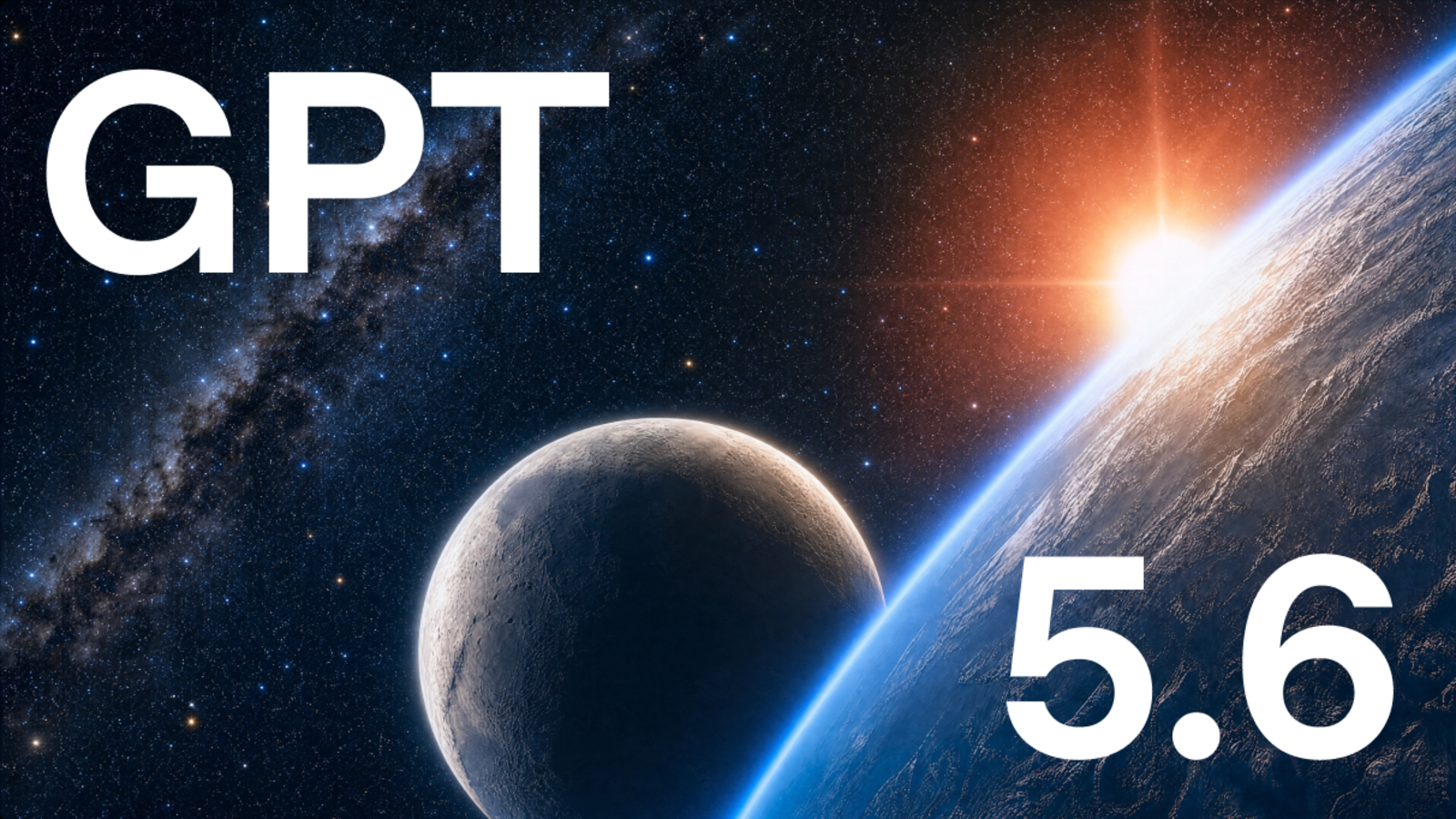
OpenAI GPT-5.6 Sol cuts token waste 54% — Luna starts at $1 per million tokens 

GigaNectar Team

OpenAI GPT-5.6 model family launch featuring Sol, Terra and Luna with token efficiency and pricing details

GPT‑5.6 series: Sol, Terra, Luna

Three tiers · one family · broad public launch 9 July 2026

OpenAI released the GPT‑5.6 family on 9 July 2026, making Sol, Terra and Luna available across ChatGPT, Codex and the OpenAI API. The rollout followed an initial limited preview restricted to a small group of trusted partners at the request of the U.S. government.

In an interview with CNBC, OpenAI CEO Sam Altman said the flagship GPT‑5.6 Sol is 54% more token efficient on agentic coding tasks and performs “as good or better” than competing models. Altman also confirmed that OpenAI worked closely with Commerce Secretary Howard Lutnick, Treasury Secretary Scott Bessent and U.S. National Cyber Director Sean Cairncross on the approval process.

Internal links: Noam Shazeer leaves Google for OpenAI · OpenAI and Anthropic target $1T IPOs · Illinois AI Safety Act (SB 315)

54%
Token efficiency gain (agentic coding)
Altman / CNBC
$852B
OpenAI valuation (Mar 2026)
$122B round
3
Models · Sol · Terra · Luna
OpenAI
1M
Token context window
All three models

Compare the three tiers

Sol
Flagship
$5 / $30 per 1M tokens (input / output)
Deep reasoning, multi‑step coding, genomics, vulnerability research. Ultra mode with subagents.
Terminal‑Bench 2.1 · state of the art
Terra
Mid‑tier · workhorse
$2.50 / $15 per 1M tokens
Support tickets, document review, internal tools. Matches GPT‑5.5 at half the cost.
Cost‑efficient · high‑volume business
Luna
Fast · affordable
$1 / $6 per 1M tokens
Quick replies, classification, routine drafts. Speed and price over deep reasoning.
Lowest cost in the family

Pricing data: OpenAI API pricing

Rollout & regulatory timeline

2 Jun 2026
Trump signs AI cybersecurity order; voluntary early‑access framework for advanced models
Late Jun 2026
Limited preview of GPT‑5.6 to “small group of trusted partners” at U.S. government request
6 Jul 2026
Illinois Governor Pritzker signs SB 315 — first state law mandating third‑party AI safety audits
9 Jul 2026
GPT‑5.6 Sol, Terra, Luna launch broadly on ChatGPT, Codex and API

Safety & risk: Preparedness Framework

Cybersecurity
High
Biological / Chemical
High
Critical threshold
Not reached
All three models — Sol, Terra and Luna — are rated High for cybersecurity and biological/chemical risk under OpenAI’s Preparedness Framework. This is the first time smaller, faster tiers have reached that rating alongside the flagship. In testing against Chromium and Firefox, Sol found exploitation primitives but did not independently build a complete, working exploit — keeping it under the Critical line.

Source: OpenAI System Card · CNBC

Pricing explorer

Compare cost per 1M tokens
Adjust the slider to see input / output pricing for each tier.
Sol: $5.00 in / $30.00 out
Terra: $2.50 in / $15.00 out
Luna: $1.00 in / $6.00 out
Based on OpenAI API standard pricing · Jul 2026

Illinois AI Safety Act (SB 315)

🔍
Third‑party audits
Mandatory annual independent audits for covered developers
⏱️
72‑hour reporting
Critical safety incidents must be reported within 72 hours
💰
$500M revenue threshold
Applies to developers with >$500M annual revenue
⚖️
Penalties
$1M first violation · $3M repeat

Signed into law 6 July 2026 · takes effect 1 January 2027. Full coverage on GigaNectar · Illinois General Assembly

In summary: The GPT‑5.6 family — Sol, Terra and Luna — was released broadly on 9 July 2026 after an initial government‑vetted limited preview. The flagship Sol model was reported to be 54% more token efficient on agentic coding tasks compared to prior models. All three tiers were made available across ChatGPT, Codex and the OpenAI API.

The rollout followed collaboration with senior Trump administration officials including Commerce Secretary Howard Lutnick, Treasury Secretary Scott Bessent and U.S. National Cyber Director Sean Cairncross. Under OpenAI’s Preparedness Framework, all three models received High ratings for cybersecurity and biological/chemical risk, though none crossed the Critical threshold.

Separately, Illinois enacted the Artificial Intelligence Safety Measures Act (SB 315) on 6 July 2026, mandating independent third‑party audits for covered developers with more than $500 million in annual revenue. The law takes effect 1 January 2027.

External sources: CNBC · OpenAI · Illinois GA
Internal: Access tracker · IPO race · Illinois AI Safety Act

Leave a comment