
A team of researchers from the University of California, Riverside revealed a series of weaknesses in existing Wi-Fi security, allowing them to intercept data on a network infrastructure that they’ve already connected to, even with client isolation in place.
The group called this vulnerability, AirSnitch, and according to their paper, it exploits inherent weaknesses in the networking stack. Since Wi-Fi does not cryptographically link client MAC addresses, Wi-Fi encryption keys, and IP addresses through Layers 1, 2, and 3 of the network stack, an attacker can use this to assume the identity of another device and confuse the network into diverting downlink and uplink traffic through it.
Xin’an Zhou, the lead author on the research, said in an interview that AirSnitch “breaks worldwide Wi-Fi encryption, and it might have the potential to enable advanced cyberattacks.” He also added, “Advanced attacks can build on our primitives to [perform] cookie stealing, DNS and cache poisoning. Our research physically wiretaps the wire altogether so these sophisticated attacks will work. It’s really a threat to worldwide network security.”
AirSnitch does not break encryption at all, but it challenges the general assumption that encrypted clients cannot attack each other because they’ve been cryptographically isolated. The vulnerability was presented at the Network and Distributed System Security (NDSS) Symposium 2026 in San Diego.
Understanding the AirSnitch Wi-Fi Vulnerability
Breaking down how this architectural flaw bypasses client isolation across home, office, and enterprise networks
Global Impact at a Glance
There are four primary ways that AirSnitch uses to bypass client isolation. The first is by abusing shared keys — since most networks use a single password or a Group Temporal Key (GTK), an attacker can make packets aimed for a specific target and wrap it inside a GTK broadcast frame to make it look like legitimate information meant for everyone. The target would then accept the traffic, thinking that it’s a broadcast packet, allowing the attacker to use that as an initial opening for more complex attacks.
Another attack vector is Gateway Bouncing, where the attacker sends data to an access point that’s addressed to a gateway MAC. When the gateway receives it, it sees that Layer 3 IP header, which is the victim’s IP address, but ignores the Layer 2 destination (which is the gateway itself). It then forwards that to the victim, essentially allowing one client to send data to another client without doing so directly.
How AirSnitch Works: The Attack Flow
Four Primary Attack Vectors
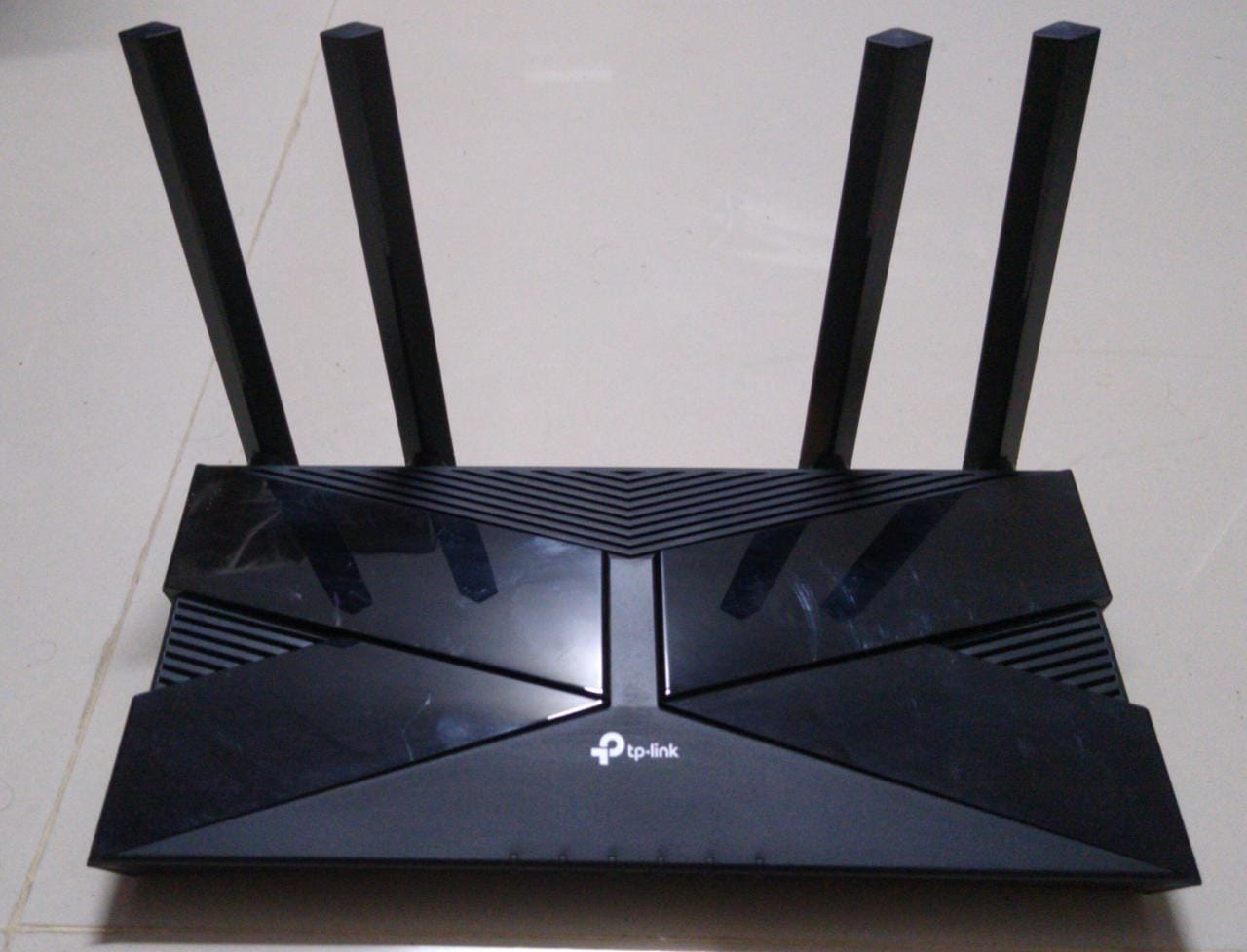
The researchers found that these vulnerabilities exist in five popular home routers — Netgear Nighthawk x6 R8000, Tenda RX2 Pro, D-LINK DIR-3040, TP-Link Archer AXE75, and Asus RT-AX57 — two open-source firmwares — DD-WRT v3.0-r44715 and OpenWrt 24.10 — and across two university enterprise networks.
This shows that the issue is not just limited to how manufacturers make and program their routers. Instead, it’s a problem with Wi-Fi itself, where its architecture is vulnerable to attackers who know how to take advantage of its flaws. The researchers called on the tech industry to address the vulnerabilities, but acknowledged that fixes will require more than simple patches — the problem is architectural and demands revision at the standards level.
Confirmed Vulnerable Devices
All tested routers showed vulnerability to at least one attack method
How to Protect Yourself
Assess Your Risk Level
“This work is impressive because unlike other frame injection methods, the attacker controls a bidirectional flow,” said HD Moore, security expert and CEO of runZero. This bidirectional control allows attackers to not only intercept data but also modify it before it reaches its destination.
Lead researcher Xin’an Zhou, who conducted the research as a doctoral student at UC Riverside and now works for Palo Alto Networks, warns that “enterprises are seemingly relying on a fake sense of security” with current WPA3 enterprise encryption.
The researchers hope that this revelation would force the industry to come together and create a rigorous set of requirements for client isolation and avoid this flaw in the future. While this may sound concerning, the researchers pointed out that this type of attack is rather complicated, especially with how complex modern wireless networks have become.
The AirSnitch vulnerability was disclosed by UC Riverside researchers at the NDSS Symposium 2026. The research examined client isolation mechanisms across home routers, enterprise WPA3 deployments, and multi-access-point systems. Every tested system proved vulnerable to at least one attack variant.
The researchers tested 11 Wi-Fi devices from vendors including Cisco Systems, Netgear, D-Link, Asus, and Ubiquiti. Vendors were notified before disclosure, but complete fixes require hardware redesign and stronger key separation. The timeline for standardization and hardware updates extends from months to years.
The research paper covered the vulnerability’s technical mechanisms, tested network configurations, and proposed mitigation strategies. The findings were shared with the wireless security community and equipment manufacturers.