
Meta’s $83.6B Metaverse Ends as Horizon Worlds VR Moves to Maintenance Mode After 300K Peak Users

GigaNectar Team

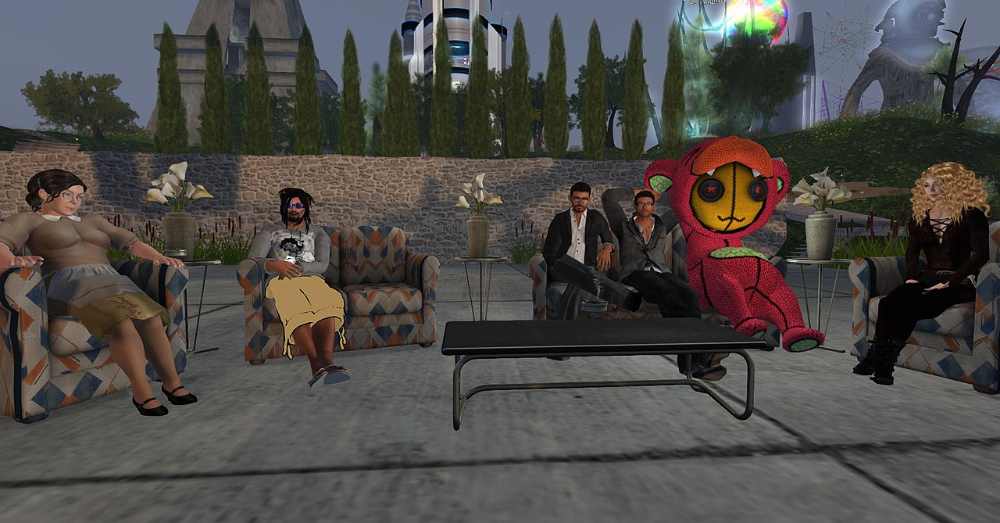
Avatars gathered at a live virtual event inside Second Life during its 11th Birthday celebration, with the Drax Files Radio Hour broadcast in progress on screen
Tech · March 2026

In October 2021, Meta Platforms placed one of the most expensive bets in tech history. Mark Zuckerberg renamed Facebook, declared the metaverse “the next frontier,” and put billions behind a vision of virtual worlds where people would work, socialize, and spend. Four and a half years later, the VR version of Horizon Worlds — the platform built to carry that vision — is being moved to maintenance mode, with no new content planned and all future development shifted to mobile.

Reality Labs, the Meta division that built and ran this experiment, has now posted cumulative operating losses of $83.6 billion since 2020, according to Meta’s own earnings reports. The division lost $19.2 billion in 2025 alone. Horizon Worlds, meanwhile, never exceeded a few hundred thousand monthly active VR users. On March 18, 2026, Meta confirmed the platform would be removed from Quest headsets. A day later, CTO Andrew Bosworth partially reversed that call — existing worlds built on the older Horizon Unity engine will keep running in VR, but no new VR content will be added. The mobile app takes over. What happened, where the money went, and what comes next — broken down below.

$83.6B Reality Labs cumulative losses since 2020
~1,500 Employees cut from Reality Labs, Jan 2026
~300K Peak Horizon Worlds monthly VR users
$19.2B Reality Labs operating loss — full year 2025

The Rise and Retreat — From 2021 to 2026

Tap any event to read what happened.

Oct 2021
Facebook becomes Meta. Zuckerberg announces the metaverse vision.
Mark Zuckerberg rebranded Facebook as Meta and wrote that within a decade the metaverse would “reach a billion people, host hundreds of billions of dollars of digital commerce, and support jobs for millions of creators and developers.” Horizon Worlds launched on Quest VR headsets in December 2021.
+ tap to expand
2022 – 2024
Billions spent. Users don’t arrive. Losses hit $47.5B over three years.
Reality Labs burned $13.7B in 2022, $16.1B in 2023, and $17.7B in 2024 — every year worse than the last. Horizon Worlds peaked at around 300,000 monthly active users in early 2022 and fell to fewer than 200,000 by October 2022 (per The Wall Street Journal). Roblox, without requiring any headset, reached over 144 million daily active users by Q4 2025. Meta’s stock fell more than 60% from its 2021 peak to its late-2022 low.
+ tap to expand
Sep 2023
Horizon Worlds gets a mobile app — an early sign the headset path wasn’t working.
Meta launched Horizon Worlds on iOS and Android to allow access without a Quest headset. The app offered a scaled-back experience closer in design to Roblox than to the immersive VR world originally described. It was the first public acknowledgment that VR hardware alone couldn’t carry the platform.
+ tap to expand
Jan 2026
~1,500 Reality Labs staff cut. Three VR game studios shut down entirely.
Meta cut approximately 1,500 employees from Reality Labs — around 10% of the division’s ~15,000 workforce. Three in-house studios were closed: Sanzaru Games, Twisted Pixel, and Armature Studio. Ouro Interactive, formed in 2023 specifically to create first-party content for Horizon Worlds, also saw heavy cuts. Reality Labs posted a Q4 2025 operating loss of $6.02 billion on $955 million in revenue — the worst quarterly result in the division’s history.
+ tap to expand
Feb 2026
Meta formally announces separation of VR and mobile Horizon Worlds.
Reality Labs VP of Content Samantha Ryan posted a blog stating Meta would be “doubling down on the VR developer ecosystem while shifting the focus of Worlds to be almost exclusively mobile.” She added: “By breaking things down into two distinct platforms, we’ll be better able to clearly focus on each.”
+ tap to expand
Mar 18, 2026
Meta announces Horizon Worlds will be removed from the Quest store and shut down on VR by June 15.
Meta posted to its community forums that Horizon Worlds would be taken off the Quest store by end of March 2026 and fully shut down in VR on June 15. Only the mobile app would remain. Meta Credits, custom VR avatars, digital clothing, and in-app VR purchases were all to be discontinued. The announcement confirmed the full retreat from the original metaverse model.
+ tap to expand
Mar 19, 2026
Bosworth partially reverses course — existing VR worlds stay, but no new VR content ever again.
After user backlash, Meta CTO Andrew Bosworth said via Instagram Stories: “We have decided, just today in fact, that we will keep Horizon Worlds working in VR for existing games to support the fans who’ve reached out.” The reversal is partial: only worlds built on the older Horizon Unity engine remain playable. Worlds built with Meta’s newer Horizon Engine — and all future development — are mobile-only. Bosworth added: “Most of our energy is going towards mobile and the Meta Horizon Engine there.”
+ tap to expand

Where the Money Went — Reality Labs Annual Losses

Operating Loss Per Year — Reality Labs ($B)
Every year since 2020, losses grew. Total cumulative loss: $83.6 billion. Source: Meta Platforms earnings reports.

“The metaverse had real legs but was obliterated by middle management completely out of touch with how young people actually use technology.”

— Vasuman Moza, former Reality Labs employee, via X · March 18, 2026

Horizon Worlds vs. The Platform It Was Built to Compete With

▼ Meta’s VR Bet
Horizon Worlds
~300K Peak monthly VR users (Feb 2022)
$83.6B Reality Labs cumulative losses since 2020
$1.1M Total consumer spending — mobile app (all-time)
▲ No Headset Needed
Roblox
144M+ Daily active users (Q4 2025)
No headset Hardware required to access
Free Entry barrier for users
Quest Headset Sales — Indexed to 2021 Baseline
IDC data shows Meta Quest headset sales fell 16% year-over-year from 2024 to 2025. Meta’s Quest remains the top-selling VR headset globally, but the overall VR market has contracted three years in a row.

What Happens Now — Key Questions Answered

What exactly happens to Horizon Worlds on VR headsets?
Horizon Worlds is being removed from the Quest store by end of March 2026. Only worlds built on the older Horizon Unity engine remain playable in VR — for the “foreseeable future,” per Bosworth. Worlds built with the newer Horizon Engine are mobile and flatscreen only. No new VR content will ever be added. Meta Credits, VR avatars, digital clothing, and in-headset purchases have been discontinued. The platform continues as a standalone mobile app on iOS and Android, where it has reached 45 million total downloads worldwide, including 1.5 million downloads in 2026 so far — a 53% year-over-year increase. Despite the downloads, total all-time consumer spending on the mobile app is just $1.1 million (per Appfigures).
Is Meta done with VR hardware entirely?
No. Meta has stated it will continue investing in Quest VR hardware and supporting third-party VR developers. The Quest line remains the global top-selling VR headset, holding roughly 73% of the global VR/mixed-reality headset market (per TrendForce), even after a 16% year-over-year sales decline from 2024 to 2025 (per IDC). Reality Labs is also planning up to 30% budget cuts for 2026, which could save $4–6 billion. What has ended is the social metaverse built on top of that hardware — Horizon Worlds as a VR-first social world. The Quest platform will refocus on gaming.
Where is Meta putting the money now?
Meta has guided $115–135 billion in capital expenditure for 2026, primarily directed at AI infrastructure including large-scale data center construction. This is nearly double the $72.2 billion it spent in 2025. Spending is tied to the company’s Superintelligence Labs initiative. Ray-Ban Meta smart glasses, developed with EssilorLuxottica, have become Meta’s clearest hardware success — over 7 million units were sold in 2025 alone, bringing the total since launch to approximately 9 million. Production capacity is being targeted at 10 million units annually by end of 2026. For the broader AI hardware picture, see our coverage of Nvidia DLSS 5 and neural rendering and the OpenAI GPT-5 family breakdown.
Is Meta alone in struggling with VR mass adoption?
No. Apple scaled back production of its $3,499 Vision Pro headset after lower-than-expected demand. The global VR headset market contracted for three consecutive years through 2024–2025. Platforms like Roblox (144M+ daily active users in Q4 2025) and Fortnite built massive social worlds without requiring any headset at all. The issue isn’t the concept of social virtual worlds — it’s the hardware barrier. A headset costing hundreds of dollars is a fundamentally different entry point than a free app on a phone most people already own. For more on how mobile security is evolving as platforms move phone-first, see the DarkSword iOS exploit report.
What about the studios and staff that were shut down?
In January 2026, Meta shut down three in-house VR game studios: Sanzaru Games, Twisted Pixel, and Armature Studio. Ouro Interactive — created in 2023 specifically to build first-party content for Horizon Worlds — also saw heavy reductions. The Supernatural VR fitness app, which Meta acquired for $400 million in 2023, was moved to maintenance mode with no new content planned. Approximately 1,500 Reality Labs employees were affected in total, representing roughly 10% of the division. A further round of broader Meta layoffs has been reported, potentially affecting 20% of the company’s wider workforce — though no formal confirmation has been issued.
How does AI fit into tech wearables and devices going forward?
The clearest shift is from immersive VR to AI-enhanced glasses and wearables that do not require users to disconnect from their physical surroundings. Ray-Ban Meta smart glasses — which include a camera, speakers, microphone, and Meta AI integration — tripled in sales year-over-year in 2025. The Meta Ray-Ban Display model, launched at $799 in September 2025, added a heads-up display to the line. Bosworth described AI development as “one of the safest bets in history” in a March 2026 Instagram AMA. Meta’s Superintelligence Labs, together with Llama model development and agentic AI for enterprise, now form the company’s primary innovation direction. For wearable tech context, see our Apple AirPods Max 2 coverage.
Summary

Meta’s Horizon Worlds was announced in late 2021 as the social core of a metaverse that would reshape the internet. The company rebranded from Facebook to Meta around that vision. By early 2026, three game studios had been shut down, over 1,500 Reality Labs employees had been let go, and the VR version of the platform was placed into maintenance mode — with no new content planned and all future development shifted to mobile. Cumulative operating losses from Reality Labs crossed $83.6 billion from 2020 through 2025, per Meta’s own earnings filings.

The mobile version of Horizon Worlds continues on iOS and Android. The platform had 45 million total worldwide downloads as of March 2026, with 1.5 million downloads recorded in 2026 so far — though total all-time consumer spending on the app stands at just $1.1 million. Meta’s capital expenditure for 2026 has been guided at $115–135 billion, directed primarily at AI infrastructure and data centers. Ray-Ban Meta smart glasses sold over 7 million units in 2025 alone. These developments were covered across the GPT-5 and AI ecosystem and neural rendering developments in parallel.

The Horizon Worlds story — from announcement to maintenance mode — was covered across the timeline, loss charts, and FAQ sections above, drawing on Meta’s official earnings data, Bosworth’s verified Instagram statements, and IDC market figures.


Leave a comment