Green for Huawei, Red for Nvidia — Who’s Filling the Vacuum in China’s AI Market?
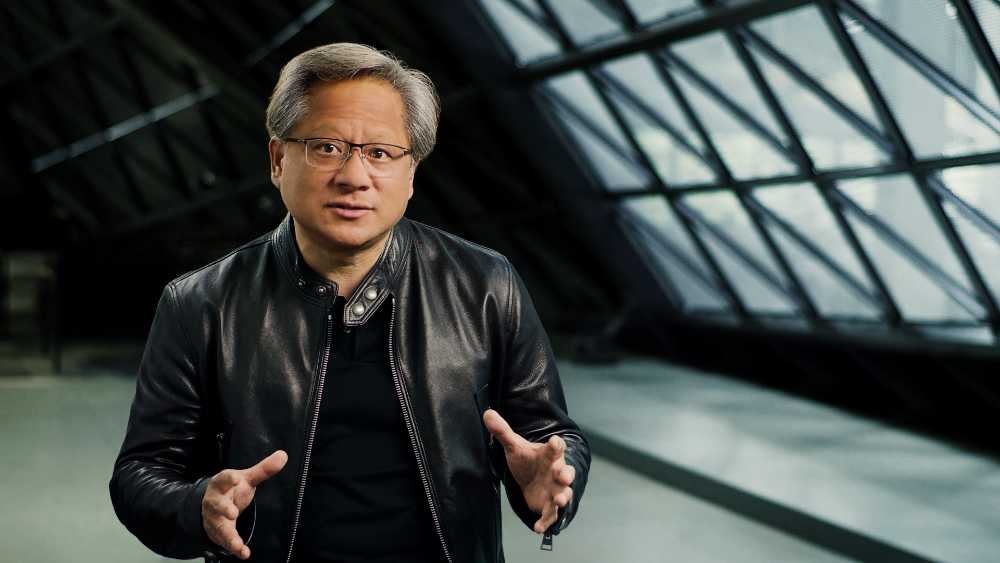
Nvidia CEO Jensen Huang has stated that the company has “largely conceded” China’s advanced AI chip market to Huawei. That admission came on May 21, 2026, alongside Nvidia’s record-breaking Q1 fiscal 2027 results — $81.62 billion in quarterly revenue, up 85% year-on-year. While the global numbers look strong, China — once responsible for roughly one-fifth of Nvidia’s data center and AI platform revenue — is now largely off the table for advanced chip sales.
The vacuum Nvidia left behind has been filled rapidly. Huawei’s AI chip business is projected to reach $12 billion in revenue in 2026, up from $7.5 billion in 2025, driven by orders for its Ascend 950PR processor. Meanwhile, AI hardware competition is reshaping the broader semiconductor market, and AMD’s CEO Lisa Su made a separate trip to Beijing just days earlier — a sign that the contest for China’s AI chip market is far from settled.
“The demand in China is quite large. Huawei is very, very strong… their local ecosystem of chip companies are doing quite well, because we’ve evacuated that market. We’ve really largely conceded that market to them.”
— Jensen Huang, Nvidia CEO, speaking to CNBC’s Sara Eisen, May 21, 2026(+85% YoY)
How US Export Controls Reshaped Nvidia’s China Access
Tap each event to expand details.
-
OCT2022Oct 2022US begins restricting advanced AI chip exports to ChinaThe Biden administration introduced export controls targeting high-performance AI chips. Nvidia’s A100 and H100 were initially blocked from China sales. The company then developed the H20 — a lower-spec version designed to comply with the rules.
-
APR2025Apr 9, 2025Trump administration requires a license even for H20 chipsThe US government told Nvidia it needed a license to export its H20 — the chip specifically engineered to comply with earlier restrictions. Nvidia took a $4.5 billion charge in Q1 fiscal 2026 tied to H20 inventory and purchase obligations it could no longer fulfil.
-
JAN2026Jan 2026H200 sales to China approved — but no chips have shippedChina approved Nvidia H200 chip purchases for ByteDance, Alibaba, and Tencent — over 400,000 units. However, as of May 2026, not a single H200 delivery has been completed, hampered by US licensing bottlenecks and Beijing’s own approval delays.
-
MAY 142026May 14, 2026Trump’s China summit — Huang attends; no chip deal finalisedHuang was a last-minute addition to President Trump’s China delegation, joining Air Force One during a refueling stop. Around 10 Chinese companies — including Alibaba, Tencent, ByteDance, JD.com, Lenovo, and Foxconn — received US Commerce Department approval to purchase H200 chips. Each approved customer may buy up to 75,000 units. US Trade Representative Jamieson Greer confirmed chip export controls were not part of the formal discussions.
-
MAY 192026May 18–19, 2026AMD’s Lisa Su meets Chinese Vice Premier He Lifeng in BeijingAMD CEO Lisa Su met He Lifeng at the Great Hall of the People on May 19, 2026 — two days after Trump’s state visit. She was not part of the Trump delegation. Su pledged to expand AMD’s investment in China. AMD’s MI308 accelerator can be sold to China without special approval. Its more advanced MI325X moved to case-by-case review in January 2026.
-
MAY 212026May 21, 2026Huang says Nvidia has “largely conceded” China’s AI chip marketSpeaking to CNBC after Q1 FY2027 results, Huang acknowledged Nvidia’s near-zero position in China’s advanced AI chip market. He told investors to “expect nothing” regarding approval to sell advanced chips in China, while expressing willingness to return if conditions change.
Key Locations in the US–China AI Chip Story
Click a marker for details on each location’s role.
Nvidia vs. AMD — China AI Chip Position
Huawei AI Chip Revenue Growth (2025 → 2026 Projection)
Sources: Nvidia Investor Relations · Huawei $7.5B (2025) and $12B (2026 proj.) per Financial Times reporting · Nvidia China data center figures are estimates based on company filing disclosures
The “Five-Layer Cake” — How Huang Describes the AI Economy
Huang used this framing in the Q1 FY2027 earnings call to describe where Nvidia is investing. Tap each layer to expand.
The competition at the chip layer connects to Nvidia’s Vera Rubin AI system buildout — the company’s next-generation hardware platform — which is moving forward independent of the China situation. Nvidia’s supply chain pressure also comes as next-generation GPU architecture plans accelerate, a knock-on consequence of the same surge in AI data center demand that is driving Nvidia’s record revenues outside China.
AMD’s position is worth watching. Its MI308 accelerator can be sold in China without special approval, and its MI325X — delivering 1,300 TFLOPS of FP16 performance with 256 GB of HBM3E — moved from outright denial to case-by-case review in January 2026. Lisa Su’s Beijing trip, where she pledged AMD’s continued investment in China, came after Su was notably absent from Trump’s official delegation. That absence was characterised by at least one Beijing-linked analyst as “catching up on missed homework.” For context, see our breakdowns of benchmark comparisons across competing AI chip architectures and AMD platform hardware performance in real-world conditions.
“I don’t have any expectation, which is the reason why we put all of our guidance, all of our numbers, all the expectations that I’ve set with all of our analysts and investors to invest nothing, to expect nothing.”
— Jensen Huang, on prospects for re-entering China’s advanced chip market, May 21, 2026Huang also told CNBC that Nvidia remains ready if access is restored: “We would be more than delighted to serve the market. We have a lot of customers there, we have a lot of partners there, and we’ve been there for 30 years.” On cash allocation, he said Nvidia’s first priority for its growing cash pile was supporting its supply chain: “As we’re growing hundreds of billions of dollars at a time, we have to support our supply chain so that they are able to support our growth.”
This piece covered Jensen Huang’s May 21, 2026 remarks acknowledging Nvidia’s near-zero position in China’s advanced AI chip market, the Q1 FY2027 results showing $81.62 billion in revenue, the H200 approval-but-no-shipment situation involving roughly 10 Chinese companies, Huawei’s accelerating AI chip revenue trajectory, and AMD CEO Lisa Su’s separate Beijing meeting with Vice Premier He Lifeng. The US Trade Representative’s confirmation that chip export controls were not part of the formal China talks was also noted.