
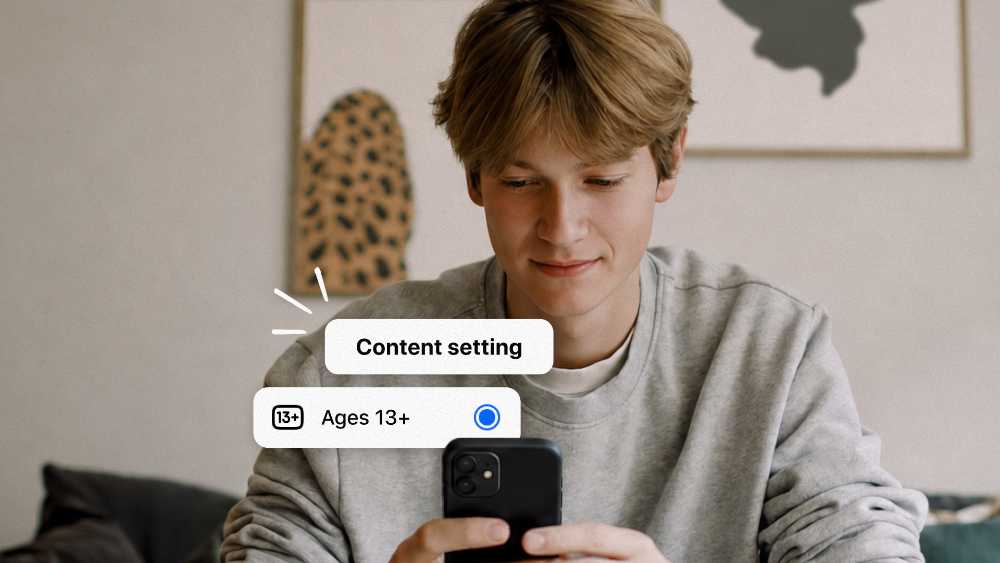
Meta has expanded its 13+ content settings for Teen Accounts globally across Instagram, Facebook, and Messenger, announced on June 2, 2026. The rollout follows a trial that launched in October 2025 in the US, UK, Australia, and Canada. Under the new default, all teens under 18 are automatically placed into a content tier modelled on movie rating criteria — designed to filter age-inappropriate material from Feed, Reels, and direct messaging.
The update arrives weeks after two jury verdicts found Meta liable for harm to young users — one in Los Angeles, one in New Mexico — and amid growing pressure from thousands of lawsuits brought by families, school districts, and state attorneys general. Meta’s Teen Accounts program originally launched in 2024, and the new expansion also ties into broader discussions around how technology companies handle younger users, from wearable health monitoring to AI-driven platform design.
What Changes on Each App
Select a platform to see exactly what the new 13+ settings introduce.
- →Default 13+ setting filters age-inappropriate posts from Feed and Reels
- →Teens cannot switch to “More Content” mode without explicit parental approval
- →Stricter Limited Content setting available — 96% less mature content vs. competitor benchmark (Alice audit)
- →Teens in Limited Content cannot view or post comments
- →Instagram blocked mature search terms more frequently than the competitor tested in Alice’s assessment
- →New feature in testing: limits how many similar posts on nutrition, weightlifting, or anxiety appear in a single session across Explore, Feed, and Reels
- →“Car surfing” content restricted for teens after Alice’s audit flagged it as a gap not yet covered by existing policy — updated promptly
- →New default 13+ setting hides content inappropriate for teens from Feed and Reels
- →Limits teens’ ability to interact with Profiles, Pages, Groups, and Events that primarily post inappropriate content
- →Limited Content setting will become available on Facebook later in 2026
- →Hundreds of thousands of parents have rated more than 15 million pieces of Facebook content to help calibrate the moderation system
- →In a late-April 2026 survey, fewer than 2% of posts recommended to teens in the US, UK, Australia, and Canada were rated inappropriate by most parents
- →13+ default setting limits teens’ ability to view links to inappropriate Facebook content shared in chats
- →Restricts the ability to chat with accounts that primarily share inappropriate content on Facebook
- →Limited Content setting will also arrive on Messenger later in 2026
- →Conversations between teens and Meta AI now carry the same content restrictions as the movie-ratings-inspired system — Meta blocked teenagers from messaging Instagram’s AI characters in January 2026
How the Settings Performed Under Stress-Testing
Alice (formerly ActiveFence) — an online safety firm — was commissioned to adversarially test Meta’s content settings and measure mature content exposure compared to a leading competitor’s teen experience. Lower exposure means better protection.
“Teen mental health is profoundly complex and cannot be linked to a single app. We will continue to defend ourselves vigorously as every case is different, and we remain confident in our record of protecting teens online.”
Two Tiers, One Goal
Parents can choose between two content levels. Both are opt-out for teens — not opt-in.
Limiting Repetitive Content in a Single Session
Meta is testing a mechanism to stop teens from seeing too many posts of one type in a row. The goal is variety, not a ban. Topics like the ones below can be helpful in small amounts — repeated exposure in one session is what the feature is designed to address.
The feature is in testing across Explore, Feed, and Reels. None of these content types are banned — the mechanism limits saturation within a single browsing session, not visibility altogether. This is part of a broader effort from Meta on AI-assisted content moderation across its platforms.
Two Verdicts in 48 Hours — March 2026
The new safety policies follow back-to-back jury decisions against Meta. Both companies plan to appeal.
“Juries in New Mexico and California have recognized that Meta’s public deception and design features are putting children in harm’s way.”
Teen Accounts: A Timeline
From the program’s first launch to the June 2026 global rollout.
Meta’s June 2 announcement covered the global expansion of 13+ content settings across Instagram, Facebook, and Messenger; the results of an adversarial external audit by Alice; and ongoing testing of a feed-balancing mechanism on Instagram. The Teen Accounts program, the two-tier content system, the March 2026 jury verdicts in New Mexico and California, and the parental feedback process involving more than 15 million pieces of rated content were all addressed. The Limited Content setting for Facebook and Messenger is expected later in 2026.
For further coverage of how major platforms and devices are adapting to AI-era content and safety expectations, see related reporting on Samsung’s One UI 8.5 AI features and the consumer hardware cycle running parallel to these platform-level changes.