
Nvidia RTX Spark Lands and Jensen Huang Calls Marvell the “Next Trillion-Dollar Company” at Computex 2026 

GigaNectar Team

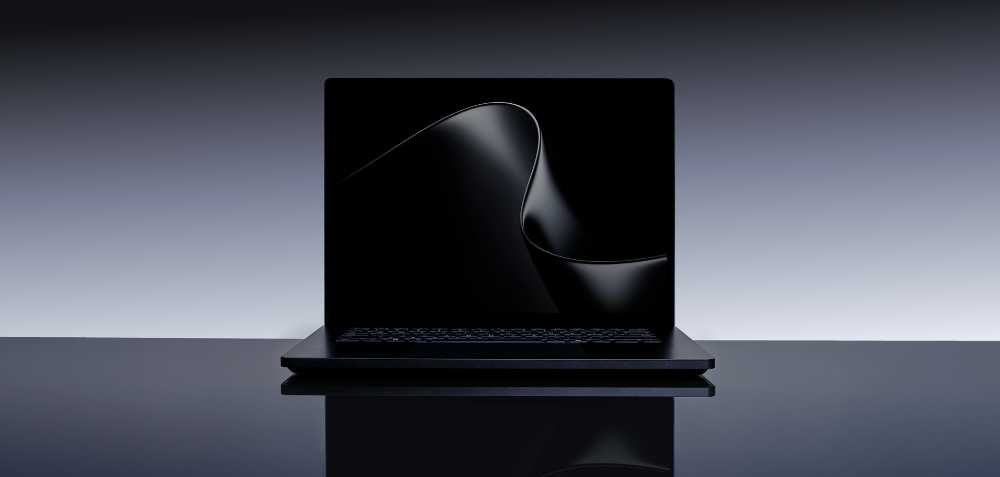
Microsoft Surface Laptop Ultra in Platinum finish showing front display and keyboard on a dark background
📍 Computex 2026 — Taipei, Taiwan

Nvidia Goes PC-Native — RTX Spark Lands, Marvell Soars

At Computex 2026 in Taipei, Nvidia CEO Jensen Huang introduced the RTX Spark superchip — a Windows PC processor co-developed with MediaTek that pairs a 20-core Arm CPU with a Blackwell GPU delivering 1 petaflop of on-device AI. The same week, Huang declared Marvell Technology the “next trillion-dollar company,” sending its stock surging over 22%. These two announcements put Nvidia at the centre of both personal computing and AI data centre infrastructure simultaneously — a position no chip company has previously occupied.

Laptops and compact desktops powered by RTX Spark are expected from Microsoft Surface, Dell, HP, Asus, Lenovo, and MSI this autumn — with Acer and Gigabyte to follow. Learn about the broader Nvidia Taiwan investment context here.

June 1–2, 2026
1 PF
RTX Spark AI Compute (FP4)
128GB
Unified LPDDR5X Memory
+22%
Marvell Stock Surge (premarket)
$2B
Nvidia’s Investment in Marvell

Inside the RTX Spark Superchip

Click each component below to understand what makes this chip different from everything else in a Windows laptop right now.

GRACE CPU 20-core Arm co-designed w/ MediaTek NVLink C2C BLACKWELL GPU 6,144 CUDA cores 5th-gen Tensor + FP4 UNIFIED LPDDR5X MEMORY 128GB · 300 GB/s bandwidth · shared CPU + GPU pool Process Node TSMC 3nm AI Compute 1 PFLOP Transistors 70B

RTX Spark internal architecture — schematic view

The Grace CPU is Nvidia’s own Arm-based processor design, developed with MediaTek. Its 20 cores are optimised for performance-per-watt, which is why RTX Spark can fit into thin laptops with all-day battery life. Unlike Intel or AMD’s x86 chips, this uses the same Arm architecture that Apple uses in its M-series Macs — and Amazon uses in its data centre chips. It connects to the Blackwell GPU via NVLink-C2C at 600 GB/s, far faster than any PCIe slot.
The GPU side carries 6,144 CUDA cores — comparable to a desktop RTX 5070 — alongside fifth-generation Tensor Cores with FP4 precision. FP4 is the format that makes running large AI models locally practical; it dramatically reduces the memory footprint of each model layer. Together this delivers 1 petaflop of FP4 AI compute. Over 1,000 games and applications already support RTX technology through DLSS, ray tracing, and Reflex.
Unified memory means the CPU and GPU share the same physical pool of LPDDR5X RAM — up to 128GB at 300 GB/s. This eliminates the usual copying of data between separate CPU and GPU memory buffers. Practically, it means RTX Spark can load and run AI models up to 120 billion parameters locally, render 90GB+ 3D scenes, and edit 12K video without running out of VRAM — something no previous Windows laptop chip could do.
Nvidia and Microsoft co-developed new Windows security primitives — covering identity, containment, and end-to-end policy — plus the NVIDIA OpenShell runtime. Together these let users define what AI agents can and cannot do on their device, route queries to local or cloud models based on privacy rules, and mask personal information before any data leaves the machine. Agent developers Hermes Agent and OpenClaw are among the first to adopt this stack.
Adobe is rebuilding Photoshop and Premiere from the ground up for RTX Spark, targeting 2× faster AI, editing, and effects. Microsoft’s Surface Laptop Ultra is the first flagship device — a 15-inch mini-LED machine with 128GB unified memory, HDMI, full-size ports, and a precision-machined chassis. Laptops run 14–16 inches and as slim as 14mm. Compact desktops are also confirmed. Over 100 software developers and game studios have committed to the platform. Read about other RTX-based hardware launches here.

One Chip, Three Workloads

RTX Spark was designed around three distinct use cases. Select a category to see the specific capabilities and performance figures confirmed by Nvidia.

Local AI Agents — Private, Meter-Free

RTX Spark was specifically designed to run AI agents on-device — no cloud subscription required. Jensen Huang’s phrase was “meter free”: agents running 24/7 without per-query costs. With 1 petaflop of FP4 compute and 128GB unified memory, the chip handles models up to 120 billion parameters with 1 million tokens of context. OpenShell enforces privacy so agents can’t send data to cloud models without user permission.

AI Compute
1 PFLOP
Max Model Size
120B params
Context Window
1M tokens
Memory Bandwidth
300 GB/s
Creative Workflows — 3D, Video, Images

Adobe is rebuilding Photoshop and Premiere specifically for RTX Spark, targeting 2× faster AI and effects performance. The chip renders 3D scenes exceeding 90GB using OptiX and DLSS, supports 4K AI video generation via ComfyUI, and decodes 12K 4:2:2 video with its dedicated Blackwell hardware decoder. Substance 3D Painter and Stager also run natively. DLSS 4.5 Ray Reconstruction with a second-generation transformer model arrives in Blender 5.3 and dozens of other apps.

Adobe Speed Gain
2× faster
3D Scene Capacity
90GB+ scenes
Video Decode
12K 4:2:2
Gaming — AAA Titles at 1440p

The Blackwell GPU’s 6,144 CUDA cores — comparable to a desktop RTX 5070 — target 1440p resolution at over 100 frames per second with full ray tracing, DLSS, and Reflex active. RTX technology is supported in over 1,000 games and applications. DLSS 4.5 Ray Reconstruction arrives in dozens of games. XBOX, KRAFTON (PUBG/NARAKA), NetEase, Riot Games, and Remedy Entertainment are confirmed RTX Spark platform partners. Check out the HyperX Omen RTX 5070 Valorant edition for more RTX gaming context.

Target Resolution
1440p
Frame Rate Target
>100 fps
RTX App Support
1,000+ titles

Marvell: The Chip Behind the Cloud’s Backbone

On June 2, Huang joined Marvell CEO Matt Murphy on stage at Computex in Taipei and called the company the “next trillion-dollar company” — a statement that sent Marvell’s stock up more than 22% in premarket trading that morning, with some reports citing gains as high as 24.7%, to a price of $273.70. That would add over $47 billion in market capitalisation if the gains held.

“When you take a computing problem, and you disaggregate it into a lot of parts, and you distribute it across the entire data center, what’s necessary is connectivity. That’s the reason why Matt’s doing so well. That’s the reason why Marvell is so essential.”
— Jensen Huang, CEO, Nvidia · Computex 2026

Nvidia invested $2 billion in Marvell earlier in 2026 to help customers more easily combine Marvell’s custom AI chips with Nvidia’s networking gear and processors. Marvell specialises in designing high-performance chips for cloud computing, AI infrastructure, 5G carrier networks, enterprise networking, and automotive systems. Its data centre business now accounts for over 75% of total revenue — up from less than 10% in 2016.

In its fiscal Q1 2027 earnings released in May 2026, Marvell posted record quarterly revenue of $2.418 billion, up 28% year-over-year. The company also forecast that its custom chips business alone would surpass $10 billion in revenue in fiscal year 2029, as hyperscale cloud providers accelerate AI data centre buildouts. Marvell’s stock was up over 158% year-to-date as of the Computex announcement. At its current market capitalisation of approximately $192 billion, the company remains well below the $1 trillion mark Huang referenced.

The surge in AI adoption has increased demand for the kind of interconnect and custom ASIC chips Marvell designs — chips that link thousands of processors together inside data centres so they can train and run AI models at scale. See related context on AI infrastructure security challenges here.

MRVL
Marvell Technology · NASDAQ
$273.70
+22–24.7% premarket · June 2, 2026
Q1 FY2027 Revenue $2.418B
Revenue Growth (YoY) +28%
Data Centre Revenue Share 75%+
Custom Chips Target (FY2029) $10B+
Nvidia Investment in MRVL $2B
Market Cap (at last close) ~$192B
YTD Performance +158%+

How Nvidia Got Here

The RTX Spark and Marvell endorsements didn’t come out of nowhere. Here’s the path that led to Computex 2026.

2020
Nvidia Attempts to Buy Arm for $40 Billion
Nvidia moves to acquire Arm Holdings, signalling early ambitions for SoC chip design. Regulators block the deal in 2022. The failed acquisition foreshadows Nvidia’s eventual in-house SoC strategy.
Late 2022
Generative AI Takes Off — Nvidia’s Data Centre Run Begins
Generative AI adoption accelerates. Nvidia’s H100 and subsequent data centre GPUs become the primary compute substrate for AI training. Data centre revenue begins its multi-year climb, eventually surpassing $75 billion per quarter.
Early 2026
Nvidia Invests $2 Billion in Marvell
Nvidia invests $2 billion in Marvell Technology, deepening ties around custom AI chips and networking infrastructure. This supports cloud customers who need Marvell’s custom ASICs to work smoothly alongside Nvidia’s networking gear.
June 1, 2026
RTX Spark Unveiled at Computex 2026
Jensen Huang announces the RTX Spark superchip — co-developed with MediaTek — at Computex in Taipei. Microsoft, Dell, HP, Asus, Lenovo, and MSI confirm devices for autumn 2026. AMD, Intel, and Qualcomm shares fall on the news. Nvidia stock rises over 6%.
June 2, 2026
Huang Calls Marvell the “Next Trillion-Dollar Company”
Huang and Marvell CEO Matt Murphy appear together at Computex. Huang’s endorsement sends Marvell stock up 22–24.7% in premarket trading. Marvell’s market cap at the time sits near $192 billion — far below the $1 trillion threshold Huang cited.

Who’s Building RTX Spark Machines

Confirmed OEM partners for autumn 2026 launches — laptops and compact desktops. Acer and Gigabyte join the lineup after the initial wave.

🖥️
Microsoft Surface
Surface Laptop Ultra — 15″ mini-LED, 128GB, full ports
💻
Dell
XPS 16 Creator Edition — 128GB unified memory confirmed
🖨️
HP
OmniBook series — among thinnest RTX Spark laptops planned
🔷
ASUS
Multiple form factors — laptops and compact desktops
📱
Lenovo
AI device portfolio — creators, gamers, AI developers
⚙️
MSI
Compact desktop featured in Huang’s keynote demo
🔜
Acer
To follow after initial launch wave
🔜
Gigabyte
To follow after initial launch wave

From Silicon to Stage — Computex 2026 Covered

This piece covered Nvidia’s RTX Spark superchip announcement at Computex 2026 in Taipei, including its core specifications — a 20-core MediaTek-collaborated Grace CPU, a Blackwell GPU with 6,144 CUDA cores, 128GB of unified LPDDR5X memory, and 1 petaflop of FP4 AI compute. The confirmed OEM partners, the Adobe partnership, and the Microsoft collaboration on Windows security primitives and the OpenShell runtime were also covered.

The piece also addressed Jensen Huang’s public endorsement of Marvell Technology as the “next trillion-dollar company,” Marvell’s Q1 FY2027 revenue of $2.418 billion (up 28% year-over-year), the $2 billion Nvidia investment in Marvell made earlier in 2026, and the resulting 22%+ premarket surge in Marvell’s stock on June 2. Marvell’s custom chips business was forecast to exceed $10 billion in revenue by fiscal year 2029.

For more on Nvidia’s presence in Taiwan and its AI infrastructure investments, see this earlier piece on Nvidia’s Taiwan plans. For the latest in hardware, explore coverage of Samsung’s One UI 8.5 AI rollout and the Oura Ring 5 launch.


Leave a comment