
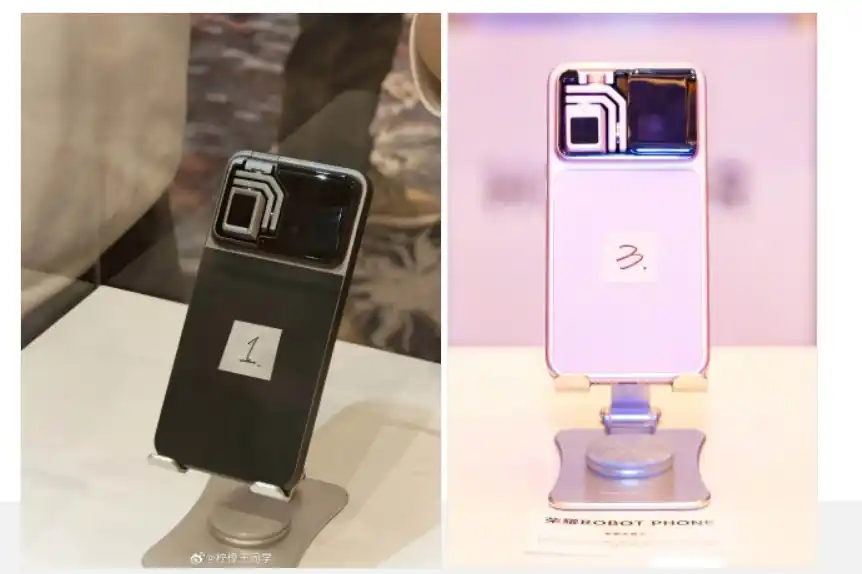
Honor revealed a working prototype of its Robot Phone at the Honor User Carnival in China in November 2025, showcasing physical units displayed behind glass. The device features a three-axis gimbal camera mounted on a motorized robotic arm that pops out from the back of the smartphone. The prototype was shown in black, white, and gold color variants, with back panels made from either tempered glass or faux leather depending on the color option.
The gimbal camera module retracts into a recessed area within the camera island when not in use. Honor first teased the Robot Phone concept in October 2025 during the Magic 8 Pro launch event, billing it as part of the company’s “Alpha Plan” AI device ecosystem strategy. The official unveiling is scheduled for Mobile World Congress 2026 in Barcelona in March, where complete specifications, pricing, and commercial availability details will be announced.
The device draws comparisons to the DJI Osmo Pocket 3 handheld gimbal camera, combining that form factor with traditional smartphone functionality. Honor has experience with mechanical smartphone components through its Magic V foldable series, providing a foundation for this robotized camera system. The back design resembles the iPhone 17 Pro with an aluminum chassis and a glass window positioned below the camera island to accommodate the gimbal mechanism.
Three Premium Color Finishes
Professional Aesthetic
The black variant features an aluminum chassis paired with a premium tempered glass back panel. This color option delivers a sleek, professional appearance suited for business and creative professionals who value understated elegance.
Tempered Glass BackContemporary Design
The white model combines an aluminum frame with a tempered glass back panel, creating a clean, modern look. This variant offers a contemporary aesthetic that complements the innovative gimbal technology housed within the device.
Tempered Glass BackPremium Tactility
The gold edition stands apart with an aluminum chassis featuring a faux leather back panel. This material choice provides a distinct tactile experience and luxury appearance, differentiating it from the glass-backed variants.
Faux Leather BackHow the Gimbal Camera System Works
The Robot Phone’s camera sits on a motorized arm with a three-axis gimbal stabilization system. When folded down, the camera functions as a standard rear-facing sensor. Users activate the mechanism through a button press, causing the module to pop up from its recessed housing in the camera island. The motorized arm allows the camera to pan, tilt, and rotate independently of the phone’s position.
Built-in AI controls the gimbal movement, tracking subjects in real time and automatically adjusting the camera position for optimal framing. This allows users to capture selfies using the higher-quality main camera sensor rather than the front-facing camera. The gimbal provides mechanical stabilization for video recording, producing smoother footage compared to electronic stabilization alone. The phone can track and frame a subject autonomously when placed on a table or in a shirt pocket.
One highlighted feature is a star-tracking mode designed for long-exposure astrophotography. The gimbal follows celestial objects across the sky as Earth rotates, keeping them centered in the frame during extended exposures. This capability typically requires dedicated tracking mounts or specialized equipment, making it an unusual inclusion for a smartphone.
Core Technical Capabilities
Pop-Up Mechanism
The camera module stores completely inside the device body, rising smoothly when activated through the recessed camera island area. The mechanism hides the gimbal when not in use, maintaining a relatively standard smartphone profile.
Three-Axis Rotation
The motorized gimbal rotates freely across three axes to adjust shooting angles. This provides unprecedented flexibility for capturing dynamic content without requiring manual phone repositioning.
AI Subject Tracking
Artificial intelligence tracks subjects in real time, automatically adjusts camera position, and selects optimal settings. The AI handles framing decisions that would typically require manual operation.
Autonomous Operation
The system follows action independently and captures footage without manual camera aiming. This autonomous capability aims to produce professional-quality content with minimal user intervention.
Product Development Timeline
Honor first teased the Robot Phone concept during the Magic 8 Pro launch event, introducing the gimbal camera smartphone idea to the public through a CGI-heavy promotional video.
Physical prototypes were displayed at the Honor User Carnival in China, marking the first time the device appeared in tangible form rather than computer-generated imagery. Multiple units were showcased behind glass in three color variants.
Official unveiling scheduled for Mobile World Congress in Barcelona. Honor will present complete specifications, pricing information, final product name, and confirm whether the device will receive commercial release or remain a concept prototype.
Potential commercial launch window if Honor confirms production plans. The company has not yet disclosed whether the Robot Phone will reach consumer markets or serve as a technology demonstration.
Unanswered Technical Questions
Honor has not disclosed several critical technical specifications for the Robot Phone. Sensor size, lens options, maximum gimbal travel range, mechanical durability ratings, and operational noise levels remain unconfirmed. The company has not revealed how much the arm can pan or tilt before reaching mechanical limits, how the tracking system handles subject occlusions, or whether the phone coordinates gimbal motion with electronic stabilization.
Battery consumption during continuous gimbal operation is unknown. The mechanism’s impact on device thickness and weight has not been quantified. Questions about mechanical reliability, dust and water resistance, and how the moving parts withstand typical smartphone usage remain unanswered. The comparison to existing gimbal camera systems like the DJI Osmo Pocket 3 provides context, but the Robot Phone’s specifications may differ significantly.
The device’s final production viability depends on these technical factors. Honor’s experience with mechanical components in its Magic V foldable line suggests the company has relevant engineering expertise, but implementing a three-axis motorized gimbal system inside a smartphone form factor presents distinct challenges. The MWC 2026 presentation should clarify whether Honor has resolved these engineering obstacles or if the Robot Phone remains primarily a concept demonstration.
Design Philosophy
iPhone 17 Pro-inspired aesthetic with aluminum chassis and glass window below the camera island to house gimbal mechanism
Years of foldable device experience from Magic V series informs gimbal system engineering and mechanical component integration
Choice between tempered glass or faux leather back panels depending on color variant selected
Prototype displayed physically at user event indicates genuine production consideration beyond pure concept demonstration
Smartphone Camera Innovation Context
The Robot Phone represents an unconventional approach to smartphone photography challenges. Traditional smartphones have progressively larger camera bumps to accommodate improved sensors and lenses. Honor’s solution moves the camera system onto a deployable gimbal rather than making the entire device thicker. This design philosophy differs fundamentally from foldable screens, periscope zoom lenses, or under-display cameras that other manufacturers pursue.
Pop-up camera mechanisms appeared in smartphones like the OnePlus 7 Pro and Vivo NEX series between 2018 and 2020. Those implementations used small motorized modules for front-facing selfie cameras, allowing full-screen displays without notches or punch holes. The Robot Phone extends this concept to a full gimbal-mounted main camera system, adding stabilization and autonomous movement capabilities not present in earlier pop-up designs.
The handheld gimbal camera category, particularly the DJI Osmo Pocket series, has demonstrated consumer demand for compact stabilized cameras. The Osmo Pocket 3 achieved strong sales figures by offering gimbal stabilization in a pocketable form factor. Honor appears to be attempting to integrate that capability directly into a smartphone, potentially eliminating the need to carry a separate device for stabilized video capture. Success depends on whether the engineering compromises required to fit the mechanism inside a phone body deliver acceptable performance compared to dedicated gimbal cameras.
Summary of Robot Phone Preview
The Honor Robot Phone prototype was displayed at the Honor User Carnival in China in November 2025, showing physical units in black, white, and gold colors with either glass or faux leather back panels. The device features a three-axis gimbal camera on a motorized robotic arm that pops up from the camera island. The mechanism was shown in both retracted and deployed positions behind glass displays.
Honor first teased the concept in October 2025 and scheduled the official unveiling for Mobile World Congress 2026 in Barcelona in March. Technical specifications, pricing, final product naming, and commercial availability confirmation will be provided at that event. The company has not yet disclosed whether the device will launch as a consumer product or remain a prototype demonstrating technical capabilities.
The gimbal camera system aims to provide AI-powered subject tracking, mechanical stabilization, and autonomous framing capabilities. The design draws comparisons to the DJI Osmo Pocket 3 handheld gimbal camera while attempting to integrate that functionality into a smartphone form factor. Honor’s experience with mechanical components in foldable devices provides relevant engineering background for this project.