
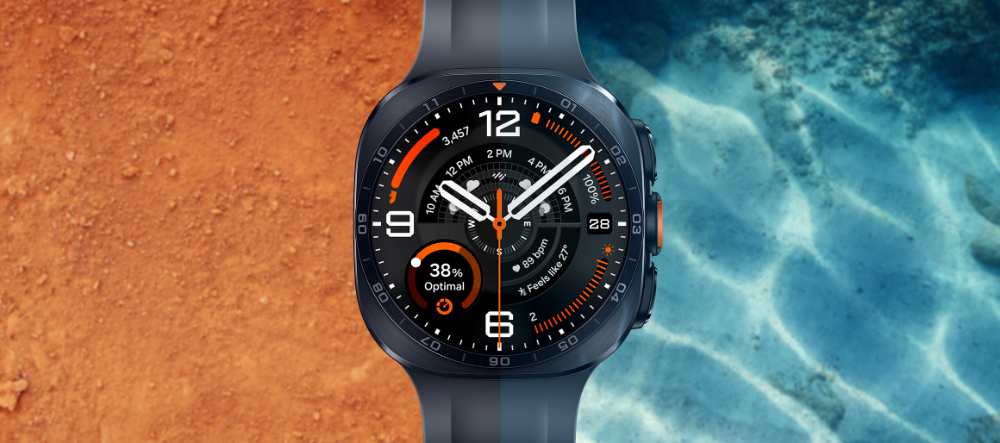
The Samsung Galaxy Watch Ultra2 specs are built for serious outdoor adventurers — not just everyday health tracking. Samsung’s new flagship smartwatch can now take you underwater with real-time dive data developed in partnership with global diving equipment brand Mares. That’s a meaningful leap for a smartwatch lineup that has mostly stayed above the surface.
Both the Galaxy Watch Ultra2 and the Galaxy Watch9 were announced at Galaxy Unpacked in London on July 22, 2026. Both run the Qualcomm Snapdragon Wear Elite Platform — the first time any Galaxy Watch has used this chip. Pre-orders opened the same day, with general availability starting August 7, 2026.
Samsung Galaxy Watch Ultra2 Specs: Titanium Case, 5,000-Nit Display, Dive Support
The Galaxy Watch Ultra2 is priced at $699. It has a 47mm titanium case, weighs 61.5 grams without the strap, and sits 10.7mm deep — 12 percent slimmer than the original Galaxy Watch Ultra. The display is a 1.52-inch Super AMOLED screen protected by sapphire glass, with a peak local brightness of 5,000 nits, making it readable in strong direct sunlight. Battery capacity is 800mAh and onboard storage is 64GB.
The diving support is the headline addition. In collaboration with Mares, the Galaxy Watch Ultra2 will support real-time tracking of ascent and descent rates, safety decompression time, and a dedicated dive computer app. Samsung has positioned this watch for high-intensity outdoor sports and underwater activity — a step up from the more general health and activity tracking of previous models.
The Galaxy Watch9 is built for everyday wear. It starts at $379 for the 40mm Bluetooth version, with the LTE model at $430. Samsung also offers a 44mm variant, which carries a slightly larger 445mAh battery versus the 40mm’s 390mAh. Both sizes share the Snapdragon Wear Elite chip and a 3,000-nit display, with a slimmer body optimized for all-day comfort and continuous health monitoring.
The switch to Qualcomm’s Snapdragon Wear Elite is a significant hardware change for Samsung. Previous Galaxy Watch models used Samsung’s own Exynos chips. Qualcomm’s platform is designed for faster AI processing and better power efficiency on wearables, which should translate to improved battery life during continuous health tracking and GPS-intensive workouts.
The Galaxy wearable lineup has been expanding steadily, and the Watch Ultra2 in particular is moving into territory previously occupied only by dedicated fitness and dive computers. At $699, it is priced as a serious outdoor sports device, not just a smartphone companion. At $379, the Watch9 remains the more practical pick for most people who want health tracking without the outdoor-adventure focus. Both go on sale August 7, 2026.