Your Android Weather App
Just Became a Search Result
For years, Android users had a no-fuss way to check the forecast — tap the sun-and-G icon on the homescreen, and a clean, full-screen interface with Google’s iconic Froggy mascot would load up. That experience is now gone for most non-Pixel Android users. As confirmed by 9to5Google, a server-side change tied to version 17.8 of the Google app has redirected the Weather shortcut to a standard Google Search results page — and the old fullscreen app is no longer accessible.
This was never an official “app” in the traditional sense. It was a fullscreen weather experience built inside the Google app, accessible via a homescreen shortcut. Google hasn’t made a formal announcement about the shutdown. Users began noticing the redirect as early as mid-October 2025, and by March 10, 2026, it had rolled out widely across Android devices and accounts.
How the Shutdown Unfolded
The transition happened quietly over several months. Here’s the sequence, in order.

Old Experience vs. What Replaced It

Find Your Google Weather Replacement
Filter by what matters most to you. Tap a category to narrow down options — each card shows data source, key features, and accuracy context.
Where Weather Data Actually Comes From
Most weather apps don’t collect their own meteorological data. In the United States, nearly all forecasting draws from the National Weather Service (NWS), part of the National Oceanic and Atmospheric Administration (NOAA). This data is publicly available at no cost. Apps and services then apply their own AI models and forecasting methods on top of that raw data — and that’s where accuracy differences come from.
The Weather Channel is run by The Weather Company, which also owns Weather Underground. The Weather Company’s ForecastWatch 2021–2024 global accuracy report — covering over 600 million forecasts across 2,100+ locations — ranked The Weather Company as the overall most accurate provider globally, nearly four times more likely to deliver the most accurate forecast than the next closest competitor for 1–9 day outlooks. Note: this report was commissioned by The Weather Company itself.
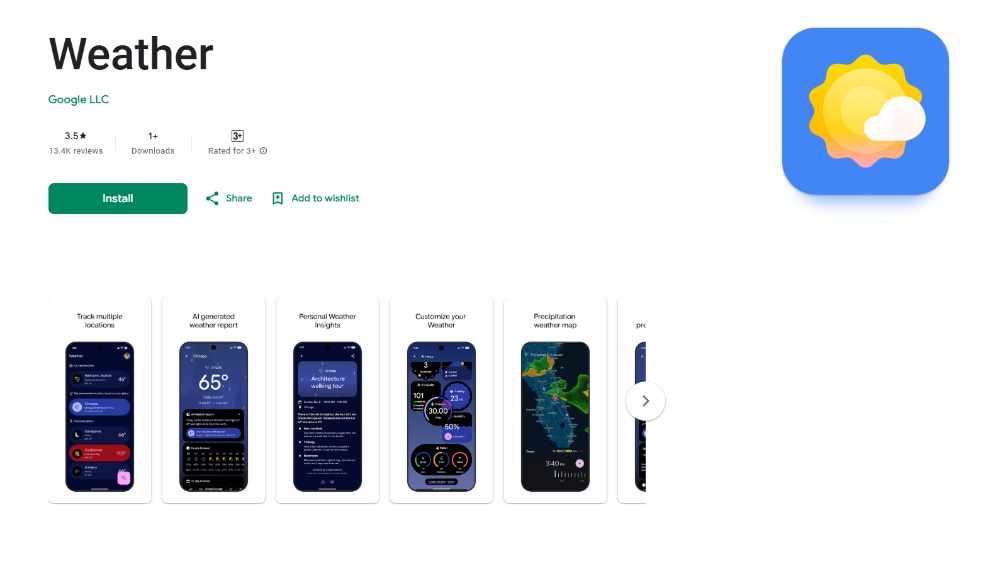
Google’s Pixel Weather app uses data from sources including the NWS and the UK’s Met Office, layered with WeatherNext 2 — Google DeepMind’s AI forecasting model, announced November 17, 2025. The related DeepMind hurricane model, used by the US National Hurricane Center during the 2025 Atlantic season, had the lowest overall track and intensity forecast error across all 13 named storms that year, outperforming traditional physics-based models including the GFS, per independent analysis by University of Miami researcher Brian McNoldy and former National Hurricane Center branch chief James Franklin.

What Was Covered
The Google Weather experience — a fullscreen, Froggy-themed shortcut built into the Google app for non-Pixel Android devices — was phased out through a server-side change coinciding with Google app version 17.8. The process began with initial user reports in mid-October 2025 and was confirmed as a wide rollout on March 10, 2026.
The replacement is a weather card embedded within Google Search results, which includes AI-generated condition summaries, an updated 10-day forecast carousel, and expandable data sections for precipitation, wind, humidity, and air quality. The old fullscreen interface is no longer accessible on migrated accounts.
Several third-party alternatives — including WeatherBug, The Weather Channel, Weather Underground, Carrot Weather, and EverythingWeather — were reviewed above, along with their data sources, free-tier details, and accuracy context. Pixel device users retain access to the native Pixel Weather app, which is not affected by this change.