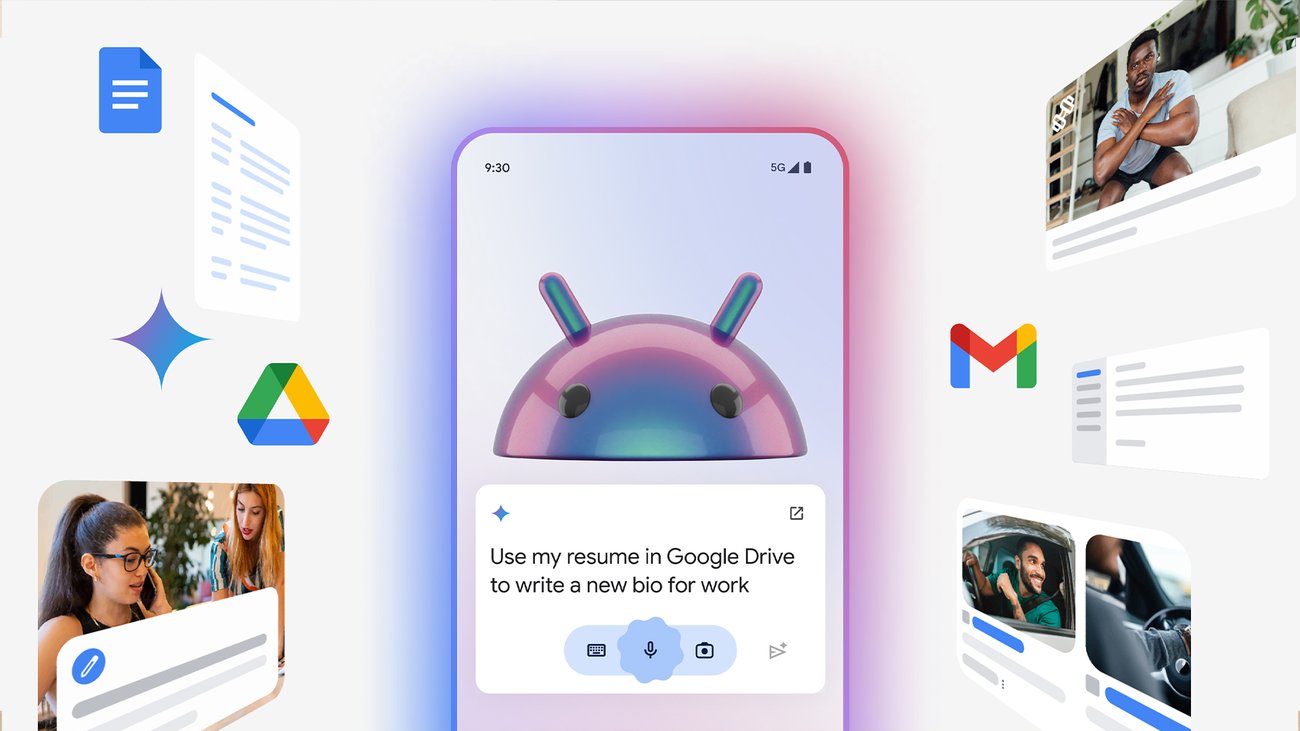
Google announced Gemini Intelligence at The Android Show on May 12, 2026 — a proactive AI layer for Android that automates multi-step tasks, builds custom widgets, and transcribes mixed-language voice notes. The features are designed to run directly on-device, without sending audio or personal data to remote servers. But there is a significant catch: only a small number of phones can run it. As confirmed by Google’s own developer documentation, Gemini Intelligence requires Gemini Nano v3, at least 12GB of RAM, and a current-generation flagship chip — hardware found almost exclusively in 2026 devices. That means the Galaxy S25, Pixel 9 series, Galaxy Z Fold 7, and millions of other recent Android flagships do not qualify, at least for now. The AI race is tightening, and this time the gatekeeping is in the silicon.
Google I/O 2026 runs on May 19–20 at Shoreline Amphitheatre in Mountain View, California, where the keynote begins at 10am PT. More Gemini updates are expected. Meanwhile, the AI compute race continues to accelerate across every major platform.
Your Phone Passed Every Test — Except the One That Matters
An interactive breakdown of what Gemini Intelligence actually does, what hardware it needs, and whether your Android phone makes the cut.
Does Your Phone Support Gemini Intelligence?
Select your device to see whether it meets Google’s confirmed hardware requirements as of May 2026.
Six Features. One AI Layer.
Tap any feature below to see how it works and what hardware runs it.
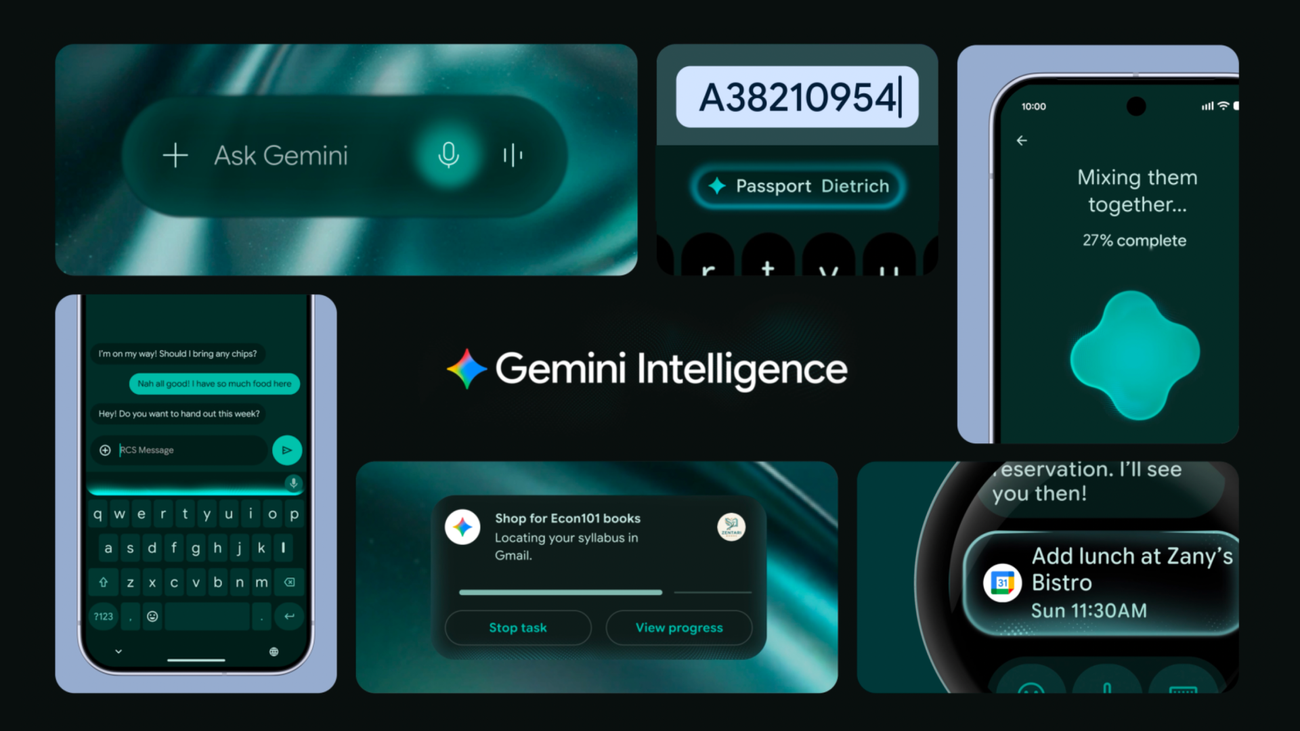
Gemini Intelligence can navigate tasks across multiple apps without manual switching. You press and hold the power button over a grocery list and say “build a shopping cart from this for delivery” — Gemini reads the list, opens the delivery app, and populates the cart. Progress appears in notifications. You only confirm the final step. Google has been fine-tuning this on food delivery and rideshare apps on Galaxy S26 and Pixel 10.
- Long-press power button over any on-screen content to trigger
- Gemini reads visual context — text, images, or documents
- Navigates the target app in the background
- Live progress shown via notification
- Stops immediately at task completion — does not act further without a new command
Starting late June 2026, Gemini in Chrome on Android can help research, summarise, and compare content across web pages. Chrome Auto Browse extends this further — it can handle tasks like booking appointments or reserving parking on your behalf, working in the background while you stay on the page you’re viewing.
- Research and summarise multi-page content
- Compare product specs or service options across sites
- Chrome Auto Browse: autonomous form completion for appointments, bookings, parking
- Rollout begins late June 2026 on Gemini Intelligence devices
Autofill with Google now uses Gemini’s Personal Intelligence to populate complex form fields across apps and Chrome — pulling relevant information from your connected apps when you choose to enable it. The feature is strictly opt-in. You control which apps connect to Gemini, and you can disconnect at any time in settings.
- Opt-in only — no automatic data sharing
- User chooses which connected apps Gemini can read
- Can be toggled off at any point in Android settings
- Data used only for form completion, not stored
Rambler is a new Gemini Intelligence feature built into Gboard. It handles natural, unpolished speech — filler words, repetition, pauses, and code-switching between languages. Speak as you normally would, and Rambler extracts the meaning and turns it into a clean, polished message. Audio is used only for real-time transcription and is not stored. Rambler can switch between languages in a single message, using Gemini’s multilingual model.
- Handles “ums”, “ahs”, self-corrections without issue
- Supports code-switching (e.g. English + Hindi in one message)
- On-device processing — audio not stored or saved
- Visual indicator always shown when Rambler is active
- Works across any text field that supports Gboard
Create My Widget lets users build custom home screen widgets using plain language descriptions. Ask for a widget that shows three high-protein meal prep recipes every week, or one that displays only wind speed and rain probability — Gemini builds it. Widgets are functional and backed by live data, not static images. They work on both Gemini Intelligence Android phones and Wear OS watches.
- “Suggest three high-protein meal prep recipes every week”
- “Show only wind speed and rain — nothing else”
- “Daily study schedule from my calendar”
- Widgets are resizable and fully interactive on home screen
- Also available on Wear OS watches
Gemini Intelligence ships with an updated visual system built on Material 3 Expressive. Animations are purposeful rather than decorative — the design is intended to reduce distractions and focus attention on active tasks. The UI responds intelligently to what Gemini is doing at a given moment.
- Built on Material 3 Expressive
- Animations designed to reduce cognitive load
- Visual system adapts to active AI tasks
- Consistent across phone, watch, and Googlebook
The Spec List That Decides Everything
Google’s official Gemini Intelligence page lists the following minimum hardware requirements. Any device missing even one of these does not qualify.
- Google Pixel 10 / 10 Pro / 10 Pro XL / 10 Pro Fold
- Samsung Galaxy S26 / S26+ / S26 Ultra
- Samsung Galaxy Z Fold 8 (expected July 2026)
- OnePlus 15 / 15R
- OPPO Find X9 / Find X9 Pro
- Motorola Signature
- Honor Magic 8 Pro
- Vivo X200 Ultra / X300 series
- Google Pixel 9 / 9 Pro / 9 Pro XL / 9 Pro Fold
- Google Pixel 7 Pro / 8 Pro (Nano v2)
- Samsung Galaxy S25 / S25+ / S25 Ultra
- Samsung Galaxy Z Fold 7 / TriFold
- OnePlus 13
- Xiaomi 15 / Xiaomi 17 series
- Honor Magic 7 Pro
- Poco F7 Ultra
Gemini Intelligence: From Announcement to Rollout
Key dates confirmed by Google, from the Android Show to the expected public launch.
Google introduced Gemini Intelligence as Android’s new AI layer at The Android Show 2026. Features covered included multi-step app automation, Rambler, Create My Widget, Gemini in Chrome, and the updated Material 3 Expressive design language. Fine-tuning was confirmed on the Galaxy S26 and Pixel 10 for food delivery and rideshare apps.
Google I/O runs at Shoreline Amphitheatre in Mountain View. The opening keynote starts at 10am PT on May 19, hosted by Alphabet CEO Sundar Pichai. Additional Gemini model updates, Search changes, and AI developer tooling are expected. Gemini Intelligence features previewed at The Android Show may be demonstrated further. Competitor AI developments continue to build pressure on Google’s timeline.
Google confirmed that Gemini in Chrome — including research, summarisation, and Chrome Auto Browse — begins rolling out to compatible Android devices in late June 2026.
According to reports, the Samsung Galaxy Z Fold 8 is expected to be the first device to publicly ship with Gemini Intelligence pre-installed, ahead of the broader Pixel 10 and Galaxy S26 summer rollout. Samsung’s Galaxy Z Fold 8 and Z Flip 8 are expected at Unpacked on July 22, 2026. This would place Samsung ahead of Pixel in the Gemini Intelligence launch order. The broader summer rollout covering Galaxy S26 and Pixel 10 follows. 5G infrastructure advances are expected to support the AI feature rollout across carrier networks.
Google stated that Gemini Intelligence features will expand to additional Android device categories — Wear OS watches, Android Auto in cars, Android XR glasses, and Googlebooks (Google’s new AI-first laptop platform) — later in 2026. Googlebooks are separate from Chromebooks and are built on a new OS. Acer, HP, Lenovo, and Dell have signed on to manufacture Googlebook hardware.
Gemini Intelligence was covered here as Google’s announced proactive AI system for Android, first detailed at The Android Show on May 12, 2026. The hardware requirements — Gemini Nano v3, 12GB+ RAM, flagship-grade chipsets, and a six-year security commitment — were outlined based on Google’s published developer documentation. Compatible devices were listed, including the Pixel 10 and Galaxy S26 series, alongside those confirmed as incompatible, such as the Pixel 9 series, Galaxy S25, and Galaxy Z Fold 7. The six features covered included multi-step app automation, Rambler, Create My Widget, Gemini in Chrome, Intelligent Autofill, and the updated Material 3 Expressive design system. The summer rollout timeline, the expected Galaxy Z Fold 8 launch in July 2026, and the later expansion to watches, cars, glasses, and Googlebooks were also noted. Related coverage on AI and the jobs conversation, open-source AI model rankings, and major cloud AI partnerships has been published separately on Giganectar.