
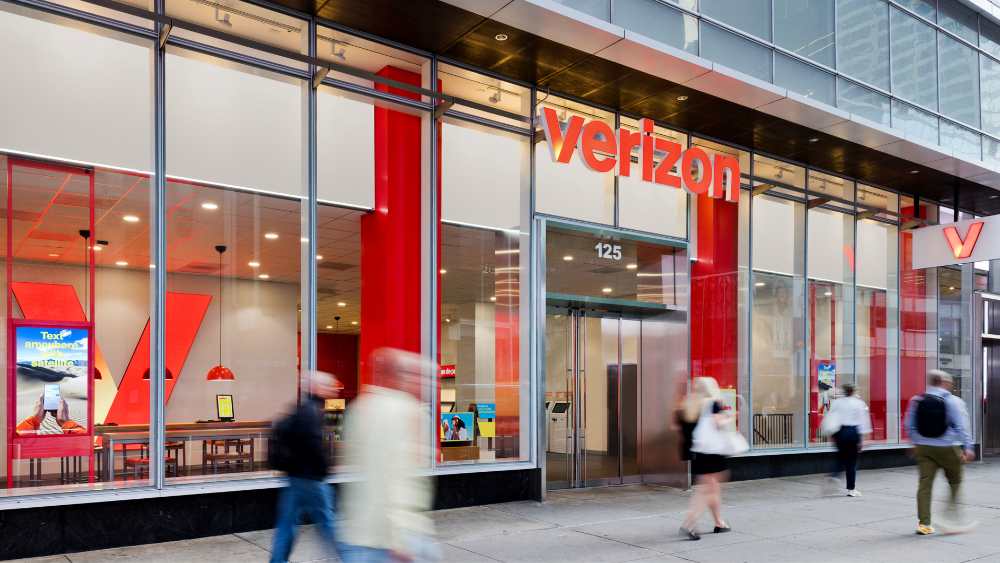
Verizon announced a major partnership with Google valued at more than $1 billion to provide dark fiber connectivity for Google’s artificial intelligence data centers, marking a significant infrastructure investment in the accelerating AI arms race. The agreement, disclosed during Verizon’s second-quarter earnings call on July 24, 2026, represents a strategic shift in how telecom companies and tech giants collaborate on infrastructure critical to advanced technology development.
Dark fiber refers to installed fiber-optic infrastructure that remains unlit—unconnected to active networking equipment. Google, rather than buying managed connectivity services from Verizon, acquires the physical fiber infrastructure and operates it using its own networking equipment. This arrangement gives Google direct control over capacity and network design without paying carrier management fees. For Google, this level of control proves essential when managing AI data center networks with exacting performance requirements.
The partnership reflects the massive bandwidth demands of modern AI infrastructure. Training large language models and running inference operations at scale require data transfer rates measured in terabits per second. Direct control over underlying fiber infrastructure lets Google optimize network performance for its specific workloads. This control matters significantly more than managed services when milliseconds of latency can affect training time and inference speed.
Verizon CEO Dan Schulman indicated during the earnings announcement that additional deals worth multiple billions of dollars are expected before the end of 2026. This pipeline of future agreements suggests the dark fiber partnerships represent a new revenue stream for Verizon as hyperscalers invest aggressively in infrastructure. The telecom company sees opportunity replacing declining consumer voice and broadband revenue with high-value enterprise connectivity.
The deal signals broader infrastructure investment patterns in the AI sector. Google, Microsoft, Amazon, and Meta are spending billions annually on data center buildout and network infrastructure. These hyperscalers recognize that AI capabilities depend not just on computing processors but on the infrastructure connecting those processors. Connectivity speed and latency directly impact AI model training and deployment costs.
Google’s need for this infrastructure reflects the company’s AI ambitions. The company competes with Microsoft (Azure/Copilot), Amazon (AWS), and others to provide AI services to customers worldwide. High-performance infrastructure gives Google competitive advantages in training models faster and deploying AI products with better performance than competitors. The Verizon partnership is one piece of Google’s broader infrastructure strategy. Google AI Ultra, launched at $249.99/month, is a direct beneficiary of this infrastructure investment.
For Verizon, the Google contract addresses fundamental business challenges. Consumer telecom revenue continues declining as competition intensifies and wireless growth plateaus. Meanwhile, enterprise cloud services and data center connectivity represent growth markets. Securing major contracts with hyperscalers diversifies Verizon’s revenue away from struggling consumer segments toward growing enterprise infrastructure. This mirrors moves by other carriers: AT&T has similarly partnered with fiber infrastructure giants to extend connectivity for enterprise clients.
The partnership also reflects telecom consolidation trends. Verizon, AT&T, and others increasingly focus on infrastructure services for enterprises rather than consumer connectivity. Dark fiber represents the ultimate infrastructure service—raw fiber capacity without carrier management. Telecom companies are becoming infrastructure utilities for technology giants rather than consumer service providers.
Industry analysts note this represents part of a broader pattern. Similar partnerships are forming between other telecom companies and hyperscalers. Everyone from smaller fiber companies to international telecommunications providers seeks high-value dark fiber contracts. The competitive intensity reflects how critical infrastructure has become to AI advancement.
The timing proves significant as AI infrastructure demand accelerates. Every week brings announcements of new AI models and capabilities requiring substantial computational resources. Supporting that demand requires building massive infrastructure—data centers, fiber networks, and interconnectivity between facilities globally. Verizon’s willingness to commit billions to this infrastructure reflects confidence in AI’s long-term importance.