The U.S. Government Wants a Piece of OpenAI — Here’s What’s Being Negotiated
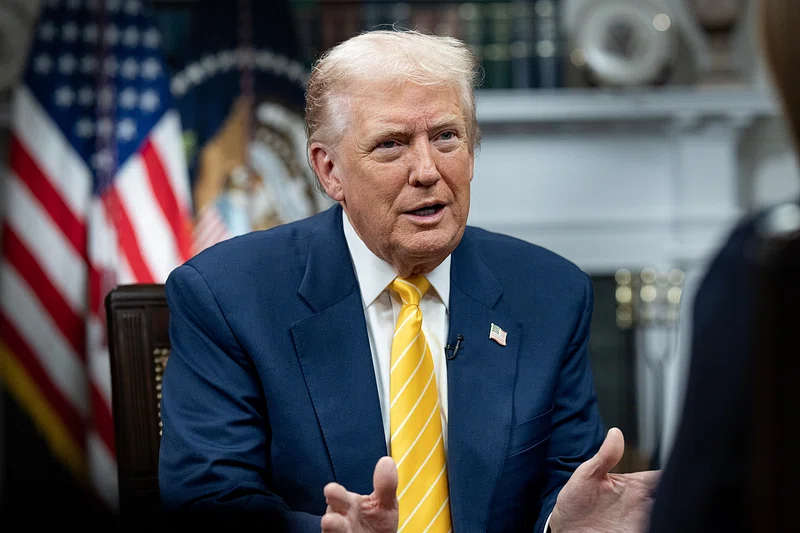
OpenAI CEO Sam Altman has been in talks with the Trump administration for over a year about donating equity in the $852 billion company to seed a public wealth fund — a move that has drawn in Washington’s biggest AI power brokers and even brought unlikely political allies to the same table. No deal has been signed. But the conversation is now very public.
A public equity stake in AI — pitched by the AI company itself
OpenAI’s idea, outlined in its April 2026 policy proposal, centres on creating a “Public Wealth Fund.” Under this framework, OpenAI would donate equity to the U.S. government, which would then “invest in diversified, long-term assets.” Citizens could potentially receive the fund’s returns directly — a dividend-style payout tied to AI growth.
The talks have been running for over a year. Altman first raised the concept with the Trump administration in 2025 and has continued discussions through June 2026, including meetings this week with lawmakers and senior officials in Washington. No official investment terms have been finalised and details remain subject to change, according to a source familiar with the matter.
Voluntary equity, not a government seizure
The discussions reportedly centre on a voluntary transfer — AI companies would cede shares to the government rather than being forced to. There is no confirmed legal mechanism yet for how such a transfer would work, and sources have warned this remains a potential hurdle.
One framework has OpenAI donating shares to seed the public fund. Returns on those shares could then be directed toward public purposes, including possible dividend payments to American households. Trump signed an executive order in February 2026 directing the federal government to establish a sovereign wealth fund, providing the structural backdrop for such a deal.
The administration has precedent for government stakes in private companies: it already holds a 10% stake in Intel and has taken positions in IBM and other quantum and critical mineral firms during Trump’s second term. Discussions with Anthropic, however, have not included any equity conversations — the company has confirmed it is not involved.
The administration’s approach: accelerate and own a piece
President Trump has moved on two tracks simultaneously. On June 5, 2026, he signed a directive instructing federal national security organisations to “accelerate AI adoption to meet surging demand” and to onboard “the most advanced AI models from multiple vendors.” Days earlier, he signed an executive order asking AI companies to voluntarily provide the government access to their models for up to 30 days before public release.
The proposed equity stake sits alongside these measures as a way to tie the government’s financial interests to AI’s growth. Trump confirmed on Air Force One that he plans to meet with leading AI executives “in the very short, very near future” to advance the conversation.
Sanders wants 50% — and he’s introduced a bill to get it
On June 1, 2026, Senator Bernie Sanders published an op-ed in the New York Times outlining the American AI Sovereign Wealth Fund Act. The bill proposes a one-time 50% tax on the stock — not the profits — of companies like OpenAI, Anthropic, and xAI. Those shares would go into a sovereign wealth fund, giving the public a direct decision-making stake in the companies.
Sanders met with Altman for nearly an hour on Wednesday in his Senate office — a meeting Altman requested. Altman told Sanders he, too, wants the public to have equity in AI companies, but could not commit to the 50% threshold. Sanders’ spokesperson confirmed: “Unfortunately, Sam Altman did not commit to any of those.”
Sanders also cited data center opposition from communities and elected officials, including Missouri Senator Josh Hawley, who told the Associated Press: “We need to pass legislation right now that says there’s not going to be any further data center development until they agree to pay for their own electricity, build their own grids and pay for their own water supply.”
The backdrop to these talks is a fast-moving AI industry on the edge of going fully public. OpenAI confidentially filed its S-1 IPO prospectus with the SEC on May 22, 2026, targeting a public debut as early as September 2026 at a valuation between $852 billion and over $1 trillion. Goldman Sachs and Morgan Stanley are leading the deal. Anthropic filed its own confidential S-1 on June 1, 2026, with a valuation already near $965 billion after closing a $65 billion Series H in May 2026.
The equity-for-government talks are unfolding against growing public resistance to AI infrastructure. Data center projects across the U.S. have drawn opposition over electricity demand, water use, and environmental impacts. States including Ohio and Virginia have moved to reconsider tax incentives for these facilities. About 70% of college students viewed AI as a threat to their job prospects, according to a 2025 poll by the Institute of Politics at the Harvard Kennedy School.
Sources: Reuters · Anthropic $965B valuation coverage
Trump and Altman are talking about a voluntary transfer. Sanders wants a legislative one. These are not the same thing.
The wider political picture adds context to why both sides are engaging on this. Concerns about AI are coming from multiple directions at once: labour displacement, data center environmental impact, and concentration of wealth. Congress this week released a bipartisan framework for the first broad federal approach to AI regulation while temporarily preempting many state-level AI laws. Anthropic, meanwhile, has separately proposed mechanisms for coordinating pauses on advanced AI development if systems become too powerful.
Altman, speaking to reporters in Washington this week, acknowledged the tension: “This is a real change to society. I think it’s possible both that people can use AI a lot and like using it and also have anxiety about what it’s going to do for the future.” He noted that while “the impact on jobs has been less than many people in our field expected,” he understands that concern remains high, particularly among young people entering the workforce.
The infrastructure buildout driving AI growth is also generating friction at the local level. Before arriving in Washington, Altman appeared alongside Michigan Governor Gretchen Whitmer at the site of a 1.65 million-square-foot data center project. Whitmer’s team said the project would create more than 2,500 union construction jobs. It drew criticism from Michigan Representative Rashida Tlaib and local activists who opposed the facility.
The talks between OpenAI and the Trump administration on a potential government equity stake were confirmed publicly on June 5–6, 2026, following over a year of preliminary discussions. OpenAI’s April 2026 policy proposal described a Public Wealth Fund structure, and President Trump acknowledged the concept on Air Force One. Senator Bernie Sanders introduced the American AI Sovereign Wealth Fund Act, proposing a 50% stock transfer from major AI companies — a threshold Altman did not commit to during their Washington meeting. Anthropic confirmed it is not part of any equity discussions with the administration. Both OpenAI and Anthropic have separately filed confidential S-1 registration statements with the SEC ahead of anticipated public offerings in late 2026. The full scope of what any government stake would look like — in terms of percentage, legal structure, and governance — was described by sources as still subject to change, with no formal terms agreed upon as of publication.